
Nutra is one of the most popular verticals in affiliate marketing, dealing with promotion of nutraceuticals. There are many networks with such offers, and it’s easy to get confused when choosing among them. To make it easier for you, we have compiled our own rating of best nutra affiliate networks.
| # | Partner | Type | Since | Offer scope | GEOs | Payment models | Registration | More |
|---|---|---|---|---|---|---|---|---|
| 1 |
 ClickDealer
|
Network |
2012 |
18,000+ |
180 |
CPA RevShare Hybrid |
Approval required |
|
| 2 |
 MyLead
|
Network |
2014 |
5,500+ |
Any |
CPA CPL COD SOI CPS RevShare PPI |
No approval required |
|
| 3 |
 INB.bio
|
Direct advertiser |
2020 |
50+ |
10+ |
CPA CPL |
Approval required |
|
| 4 |
 iMonetizeIt
|
Network |
2017 |
7,300+ |
Any |
CPA CPL CPS COD SS |
Approval required |
|
| 5 |
 LemonAD
|
Direct advertiser |
2020 |
1,500+ |
Any |
CPA CPL CPS |
Approval required |
What Nutra Affiliate Marketing Is
Nutra affiliate marketing is performance marketing around health and wellness products where affiliates are paid for a defined action, such as a submitted lead, a confirmed COD order, a paid trial, or a completed purchase. In practice, “nutra” usually means direct-response offers that rely on fast trust-building: simple promise, localized landing, frictionless checkout, and a call center or payment flow that closes the order.

Nutra vs Health & Beauty: Do They Differ?
In affiliate marketing, “Nutra” is basically the performance/DR (direct-response) slice of Health & Beauty — supplements, wellness products, and “problem-solution” offers sold through aggressive funnels. Health & Beauty is the broader category that can include nutra plus cosmetics, skincare, grooming, devices, and brand-style e-commerce. In many CPA networks these labels overlap heavily and are often used interchangeably, but operationally “nutra” usually implies short funnels + hard KPIs (CPA/CPL/COD), stricter traffic rules, and more focus on approval rate/lead validation, while “Health & Beauty” may also include softer, brand/e-com offers with different conversion events and sometimes different allowed sources.
What Is a Nutra Affiliate Network?
A nutra affiliate network is the middle layer between affiliates and advertisers/brands. The network provides the offer inventory (often across many GEOs), tracking (links, postbacks, subIDs), payout terms, and a manager who can approve traffic sources, raise caps, and share what’s working right now. For affiliates, the network reduces the “time to launch” because you don’t need to negotiate every offer directly, and you can switch GEOs/offers quickly if something gets saturated or restricted.
How Nutra Affiliate Marketing Works
Nutra, despite its high competitiveness, remains one of the best affiliate niches. And the workflow here is just like in any other niche, but the details decide whether you get paid. First, you pick an offer + GEO + allowed traffic source, then build a funnel: ad → pre-lander (optional) → landing page → conversion event. In a COD funnel, the user submits an order form, after which the advertiser validates the lead through a call center. Depending on the offer, the payable event may be the confirmed order or completed delivery. Your tracker records the click and sends the conversion via S2S postback (plus subID data so you can see which ad/creative/site placement produced it). After validation and the hold period, the network pays you on the agreed schedule — and your real KPI becomes approved rate, not just raw leads.

Payment Models in Nutra Affiliate Marketing
In nutra, the “payment model” is simply the rule for what gets counted as a conversion and when it becomes payable. Two offers can both say “$25 CPA,” but one pays on raw form submits and the other pays only after a call center confirms the order or after delivery. That difference decides your real ROI because it changes approval rate, hold time, and how much gets scrubbed.
COD (Cash on Delivery) is the classic nutra model in many Tier-2/3 markets. The user submits an order form, and a call center validates the lead. Affiliates are usually paid for a confirmed order, although some offers pay on the submitted lead or only after completed delivery. Affiliates are usually paid for an approved/confirmed order, and sometimes only after delivery. The key metric is approval rate: duplicates, unreachable phones, wrong GEO details, and call center delays will kill profitability even if CTR and raw leads look fine.
Trial / “free + shipping” / low-ticket trial funnels take a small payment upfront and may rebill later (continuity). You’re paid on the paid event (trial purchase) or on a qualified billing step. These offers can work well in card-heavy GEOs, but they come with heavier compliance pressure and higher sensitivity to refunds and chargebacks, which affects holds and long-term stability.
Straight sale (CPS or purchase CPA) is a one-time checkout purchase where you get a percent of sale or a fixed payout on purchase. This model tends to reward trust and intent: it often performs best with warmer traffic (SEO/content/influencers, brand-like funnels) and can be harder to scale on cold paid traffic unless the landing, pricing, and proof are very strong. Refund windows and holds are usually the big operational variable.
CPL lead-gen (SOI/DOI) pays for a lead submit, sometimes requiring a second confirmation step like email/SMS (DOI). It’s a common way to test angles quickly, but it’s also where scrubs happen a lot: duplicates, fake data, low-quality leads, and incentive-like behavior get declined. DOI generally improves quality but reduces volume, so you’re always balancing speed of testing vs approval stability.
Hybrid and RevShare models combine a fixed payout with backend revenue share, or rely mainly on revenue share over time (more common when there’s continuity/upsell economics). They can be very profitable if the advertiser has strong retention and clean reporting, but you’re more dependent on attribution accuracy, retention policies, and the advertiser’s accounting.

How We Picked the Best Nutra Affiliate Networks
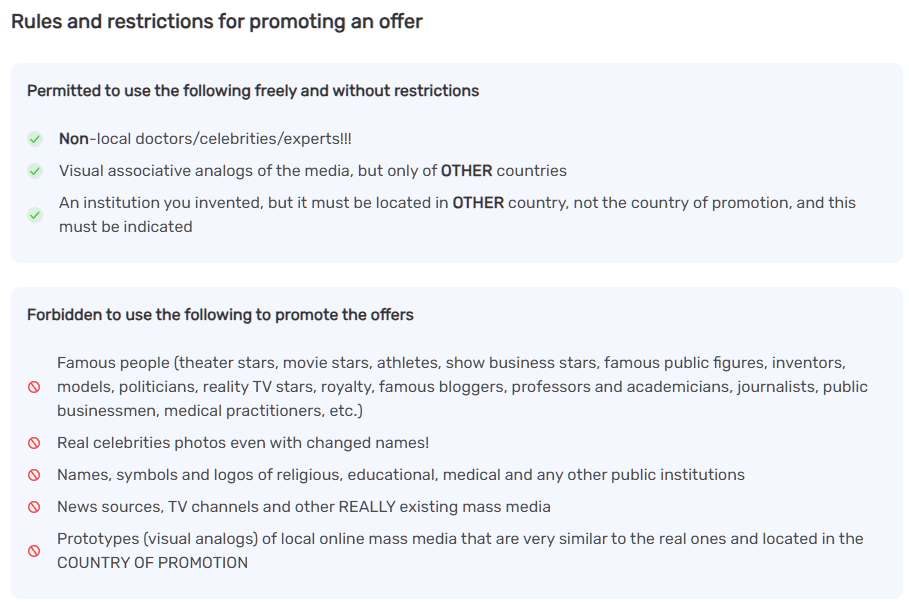
We built this top-list around operational criteria that affect ROI and scaling, not brand hype. Each network was evaluated on (1) offer depth and how easy it is to find/filter offers by GEO and rules, (2) traffic-source clarity (what’s actually allowed per offer, and how strict enforcement is), (3) tracking tooling you need to scale safely (S2S postback, subID support, multi-event tracking, API/custom domains), (4) payout terms that don’t kill cash-flow (cadence, minimums, holds, payment rails like USDT/wire/e-wallets), and (5) launch support that matters in nutra (localization assets, smartlink/testing options, and a realistic path to faster payouts once traffic quality is proven).
How to Choose a Nutra Affiliate Network
Picking a nutra network is mostly an operational decision: can you track cleanly, get paid on time, run your traffic source without surprises, and scale offers without getting trapped by caps or validation issues. Use the checklist below as a practical filter.
| What to check | Good signs | Red flags |
|---|---|---|
| Tracking setup | S2S postbacks, subIDs, click IDs, and test conversions | Pixel-only tracking or unclear attribution |
| Reporting and conversion stages | Separate data for leads, approvals, deliveries, sales, or rebills | Delayed reports or one generic conversion status |
| Traffic rules and source compatibility | Clear rules for sources, placements, brand bidding, and incentives | Vague rules or restrictions disclosed after launch |
| Offer and GEO depth | Several suitable offers and alternative funnels in the target GEO | One usable offer with no practical replacement |
| Clear conversion definition | The payable event is stated precisely before launch | “CPA” without explaining what actually gets paid |
| Approval-rate transparency | Specific decline reasons and approval data are available | Generic “low-quality traffic” explanations |
| Caps and scaling path | Initial caps and the process for increasing them are clear | Unexplained cap reductions or no scaling procedure |
| Payout schedule and minimum | Payment frequency, threshold, and faster-term requirements are disclosed | Changing dates or hidden payout thresholds |
| Hold period and validation | The hold reflects a defined approval, delivery, or refund window | Repeated extensions or retroactive changes |
| Payment methods | Usable methods with clear fees and processing times | Limited options or undisclosed fees |
| KYC timing | Verification requirements are explained before traffic starts | Unexpected KYC request after a balance accumulates |
| Manager effectiveness | Fast replies, relevant recommendations, and help with tracking or caps | Generic replies and slow problem resolution |
| Compliance policy | Clear guidance on claims, creatives, pre-landers, and prohibited tactics | Compliance objections raised only after conversions arrive |
| Advertiser relationship | The network can investigate call-center, funnel, or approval-rate issues | No escalation path or explanation of sudden performance changes |
Biggest Nutra Affiliate Offer Categories and Where They Work
Nutra “categories” are really demand clusters: people search (or click) when they have a specific problem, a specific fear, or a specific vanity goal. What converts isn’t the product name — it’s the angle + funnel type (COD vs trial vs purchase) matched to the GEO and traffic temperature.
Weight loss & metabolism is evergreen because the intent is constant and creatives are easy to refresh (new “method,” new “routine,” new “story”). It works across many GEOs, but the funnel has to match trust: aggressive DR can work in COD-heavy markets, while Tier-1 typically needs cleaner compliance and stronger proof layers.
Joint/back pain & mobility converts well because it targets older audiences with persistent pain and high willingness to try “relief” solutions. It’s one of the most stable COD categories in many Tier-2/3 GEOs (Sri Lanka, for instance), and it also works in content funnels where you can build credibility (symptoms, causes, routines, comparisons).
Men’s health (potency/libido/prostate) is a classic high-EPC category, but it’s also high-risk for moderation, claims, and aggressive creatives. Performance depends heavily on platform rules and the level of explicitness allowed; it often does better in native/push/email than on strict social placements unless the creative is softened.
Skin care & beauty is broad: anti-aging, acne, pigmentation, hair growth. It performs well when the creative is visual and the landing is localized. It’s often easier to run as e-commerce (purchase CPS/CPA) than “hard nutra” claims, especially on Tier-1 sources with strict ad review.
Cardio and blood pressure offers often target older audiences and are commonly promoted through COD or advertorial-style funnels, particularly in GEOs where direct-response health products remain widely available.
Diabetes and blood sugar support offers can attract strong problem-aware demand, but traffic sources and advertisers frequently impose tighter restrictions on their positioning and promotional claims.
Vision and hearing offers also tend to target older audiences and can work through COD and content-led funnels when the messaging focuses on support or symptom management rather than guaranteed restoration.
Across these categories, affiliates should use conservative wording, appropriate disclaimers, and offer-specific compliance guidance. Claims that imply guaranteed treatment, reversal, or cure are more likely to create moderation and approval problems.
Some networks also classify amulets and similar pseudo-wellness products as Nutra because they use comparable direct-response and COD funnels, although these offers tend to carry higher moderation, misleading-claims, and return risks.

Common Traffic Sources by Nutra Offer Type
COD-heavy categories (joint pain, cardio, “symptom relief,” older-demo supplements) usually match best with native and push because you can run high-volume DR angles and iterate quickly on headlines and prelanders. They also work with Telegram/community traffic in certain GEOs when you can drop a warm explanation + social proof and drive to a localized landing.
High-moderation categories (men’s health, diabetes, blood pressure, anything “medical”) often perform better on platforms where you can control the message and reduce ad-review friction: SEO/content sites, email, and native advertorials with careful compliance. If you rely on social, you typically need “soft” creatives and a clean funnel, otherwise you’ll burn accounts and creatives faster than you can scale.
Beauty/skin/hair is flexible: it can run direct response on native/push with visual angles, but it also benefits from content-driven platforms (SEO, social content, influencer-style pages) because trust and demonstration matter. When it’s closer to cosmetics/e-com, purchase funnels and retargeting tend to outperform pure “hard nutra” landers.
Weight loss sits in the middle: it can scale as DR in many GEOs, but it also works extremely well with content funnels (meal plans, routines, “my results” stories) because the audience is broad and platform restrictions vary. The best operators treat it as a testing engine: DR to find angles fast, content to stabilize and reduce moderation risk.
You can find more about offers and how to work with them in our case studies compilation.
Campaign performance also depends on the landing pages, pre-landers, and ad creatives used. See our dedicated guide to creating promotional materials for Nutra campaigns.
FAQ
In many Tier-2/3 GEOs, COD dominates because users are more willing to order without paying online, and advertisers close via call centers. In card-heavy GEOs, you’ll more often see trial / low-ticket front-end or purchase CPA/CPS. The “best” model is the one that matches your traffic and cash-flow: COD can scale volume, but approval rate and validation speed decide profitability.
It depends on the advertiser. Some pay on confirmed orders (after call center verification), others only on delivered/paid orders. If the network can’t clearly state which event is payable and what the validation window is, that offer is risky for budgeting.
Most declines come from duplicates, unreachable or fake phone numbers, wrong GEO data, incent-style behavior, or low-intent traffic that never confirms with the call center. You reduce rejects by using correct phone formats, filtering placements, matching the funnel to the source (no “cold push → long form”), and tracking by subIDs so you can cut the bad segments fast.
Holds exist because advertisers validate: COD needs confirmation/delivery checks, and card funnels have refunds/chargebacks. Holds are longer when traffic is new, when the offer has high return risk, or when quality signals look suspicious. The practical question is whether the network can explain the hold logic and whether you can earn faster terms after proving stable quality.
Many networks will request KYC either before your first payout or when you request higher limits/faster terms. The important part is timing: if KYC is sprung at the last minute, it can freeze cash-flow. Treat “when is KYC required” as a required pre-launch check.
Commonly accepted sources include native, push, search/PPC, social, email, and sometimes ASO—but nutra is almost always offer-rule-based, not “network-wide.” Pop/redirect and incentivized traffic are often restricted to specific campaigns only. Always read the offer’s traffic rules before you launch.
SmartLink is useful for quick testing when you want to validate a traffic source/GEO without manually wiring multiple offers. Direct offers win when you need control: specific lander/prelander, strict compliance, stable payout event, and clean optimization. Many affiliates use SmartLink to scout and then switch winners to direct campaigns.

Ratmir started his copywriting career back in 2016. He is now editor-in-chief with an MA with Honors in Linguistics.
His primary expertise is in affiliate marketing, EdTech, education, IT, and sports.
Ratmir specializes in content marketing, content management, proofreading, and translation.