

This 2026 ranking compares affiliate networks and direct advertisers that provide access to ecommerce offers. The table summarizes each platform’s years in operation, reported offer volume, GEO coverage, payment models, and approval requirements; the methodology below explains how we determine the order.
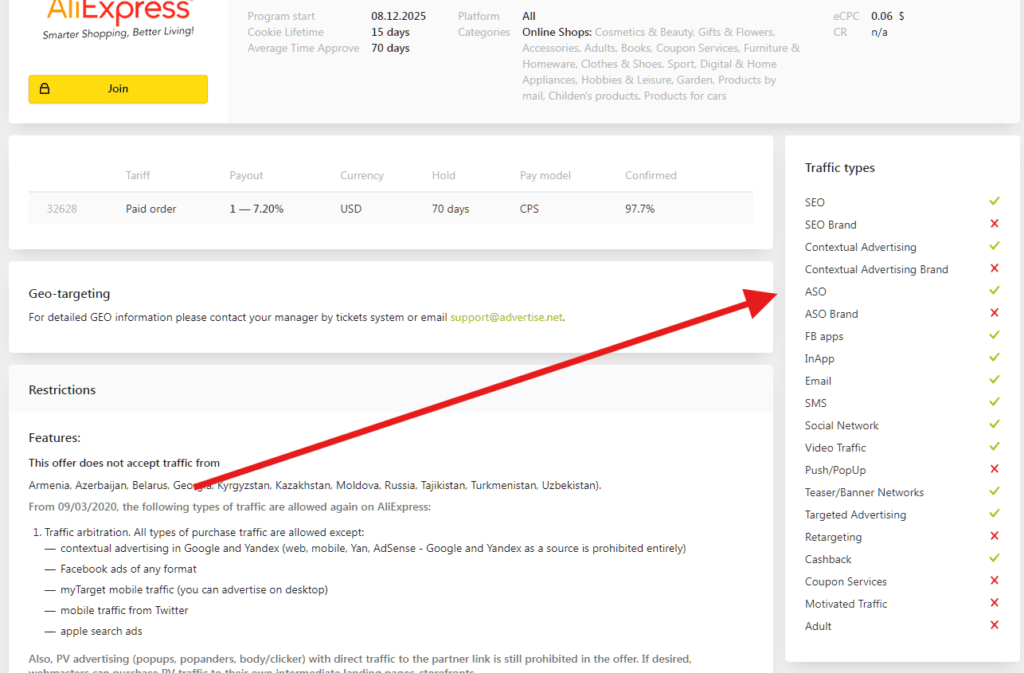
| # | Partner | Type | Since | Offer scope | GEOs | Payment models | Registration | More |
|---|---|---|---|---|---|---|---|---|
| 1 |
 ClickDealer
|
Network |
2012 |
18,000+ |
180 |
CPA RevShare Hybrid |
Approval required |
|
| 2 |
 MyLead
|
Network |
2014 |
5,500+ |
Any |
CPA CPL COD SOI CPS RevShare PPI |
No approval required |
|
| 3 |
 CpaRoll
|
Network |
2021 |
400+ |
80+ |
CPA RevShare |
Approval required |
|
| 4 |
 Advertise
|
Network |
2015 |
n/a |
Any |
CPA RevShare Hybrid |
No approval required |
|
| 5 |
 LemonAD
|
Direct advertiser |
2020 |
1,500+ |
Any |
CPA CPL CPS |
Approval required |
How We Rank Ecommerce Affiliate Networks
We rank networks by how well they serve ecommerce affiliates across the factors that most directly affect campaign performance. We prioritize the availability and relevance of ecommerce offers, GEO coverage, commission and payout terms, approval and traffic rules, and tracking capabilities. Onboarding and affiliate support are also considered when they materially affect access to offers or campaign management.
Our rankings are based on AffDays reviews, publicly available terms, and information available through network accounts or representatives. The order reflects our editorial assessment at the time of the latest page update, rather than any single metric. Because offer access and conditions may vary by advertiser, GEO, traffic source, and account status, affiliates should confirm the applicable terms before launching a campaign.
What Ecommerce Affiliate Networks Are
Ecommerce affiliate networks give affiliates access to programs from multiple online stores and brands through one account. Unlike direct affiliate programs, they centralize offer discovery, tracking, reporting, and payouts, reducing the need to manage each merchant separately.
Advertisers and networks define commission rates, attribution windows, traffic restrictions, and approval rules for each offer. Sales are recorded through cookies, pixels, or server-to-server postbacks, then reviewed for cancellations, returns, fraud, and policy violations before commissions are approved. The platforms in this ranking differ primarily in their ecommerce offer availability, GEO coverage, payout terms, tracking tools, and traffic requirements.
For those who are new to this niche, we have published our ultimate ecommerce affiliate guide.
How to Choose an Ecommerce Affiliate Network
When choosing an ecommerce affiliate network, the first thing to evaluate is GEO and merchant coverage. A strong network should offer merchants that actually match your traffic geography and audience intent. Broad GEO coverage matters less than having relevant, converting merchants in your target markets, especially for content and SEO-driven traffic.
Ecommerce margins can be thin, so payout terms matter. Look beyond headline commission rates and pay attention to cookie duration, payout frequency, minimum withdrawal thresholds, and refund or chargeback policies. Networks with delayed approvals or frequent reversals can significantly distort real ROI, even if nominal CPS rates look attractive.
Tracking quality directly affects earnings. Reliable networks provide transparent conversion reporting, clear attribution logic (usually last-click), and stable tracking that doesn’t break during high-traffic periods. Poor tracking or unclear attribution rules often lead to missed conversions and disputes that are hard to resolve at scale.
Finally, review traffic restrictions carefully. Ecommerce networks tend to enforce strict rules around brand bidding, coupon usage, cashback, email promotions, and paid traffic. Choosing a network aligned with your traffic sources reduces friction, minimizes compliance issues, and allows you to scale without constant renegotiation or account risk.
Commission Models in Ecommerce Affiliate Marketing
Ecommerce affiliate marketing is built primarily around CPS (cost per sale) models, where affiliates earn a percentage of the order value or a fixed amount per completed purchase. Percentage-based CPS is common with retail and DTC brands, while fixed payouts are more typical for subscriptions, bundles, or products with stable pricing. In practice, margins, refund rates, and average order value matter more than headline percentages when evaluating real profitability.
Cookie duration plays a critical role in attribution. Short windows (24 hours to 3 days) favor high-intent traffic such as brand searches and deal pages, while longer cookies (7–30 days or more) better suit content, reviews, and comparison sites where the purchase decision takes time. Affiliates should factor in cross-device behavior and repeat visits, as many conversions don’t happen on the first click.

Some merchants use hybrid or assisted attribution models, combining CPS with CPA elements or crediting multiple touchpoints in the funnel. This may include bonuses for first-time buyers, partial attribution for assisting traffic, or different rates depending on customer status. While these setups can increase total payouts, they also add complexity, making it essential to understand how conversions are credited and when commissions can be adjusted or reversed.
Traffic Sources for Ecommerce Affiliates
SEO and content remain the most stable traffic source for affiliates. Product reviews, comparisons, category pages, and seasonal content work well with CPS models because they target users already close to purchase. SEO traffic benefits most from longer cookie durations and performs best with established brands or clearly differentiated products.
Coupons and cashback traffic is widely used in ecommerce affiliate marketing, especially with large retailers and marketplaces. This traffic converts well at the bottom of the funnel, but commissions are often lower, and attribution conflicts are common due to last-click models. Affiliates relying on coupons need to account for stricter rules around brand usage, discount claims, and voucher validity.
PPC traffic can be effective but comes with tighter constraints. Many merchants restrict bidding on brand keywords or direct URL use, allowing only generic or category-level terms. Non-brand PPC requires careful funnel design and margin control, as CPS payouts can be quickly eaten up by rising click costs and competition.
Ad network traffic (display, native, push, pop) is often used, but it comes with stricter limitations and higher risk compared to search or content traffic. Most merchants restrict direct linking, brand usage in creatives, and discount claims when traffic comes from ad networks, which makes funnels more complex and margins thinner. As a result, ad network traffic is typically used for testing or short-term scaling of specific offers rather than as a stable long-term source, and it works best with non-brand angles, pre-landers, and carefully controlled acquisition costs.
Influencer and social traffic is typically used for product-driven ecommerce offers, launches, and impulse purchases. While conversion rates are lower than search-based traffic, volume and reach can compensate when paired with strong creatives and time-limited promotions. This traffic source works best with recognizable products, clear value propositions, and mobile-optimized checkout flows.
FAQ
Affiliates can generally maintain accounts with several networks unless a network or offer agreement states otherwise. Keep tracking links and reports separate, and check the applicable rules before promoting the same merchant through multiple networks.
They can. Network approval grants access to the platform, but individual advertisers or restricted offers may require an additional review. The network may ask about your traffic source, GEO, and promotional methods before enabling access.
Not in every case. Some networks accept social media, paid advertising, email, mobile apps, or other promotional channels, while others—or individual advertisers—require an active website or established audience. Applications should accurately describe the traffic source you intend to use.
Access varies by network. A public directory may show offer categories or limited details, while merchant names, payouts, and full traffic rules may only be visible after approval. Manager-gated offers usually require a direct request.
Stop sending new traffic and replace the tracking link with an active offer. Do not assume that a paused offer will continue tracking or paying for new conversions. Check the network dashboard or contact your manager to confirm how pending conversions will be handled.

Ratmir started his copywriting career back in 2016. He is now editor-in-chief with an MA with Honors in Linguistics.
His primary expertise is in affiliate marketing, EdTech, education, IT, and sports.
Ratmir specializes in content marketing, content management, proofreading, and translation.