

This directory compares ad networks that affiliate marketers and media buyers use to purchase push, popunder, native, video, and other traffic. Networks are grouped by ad format and compared by pricing model, GEO coverage, minimum deposit, supported verticals, and campaign controls.
| Network | Pricing models | GEOs | Best for verticals | Minimum deposit | Special features | More |
|---|---|---|---|---|---|---|
 EpicAds
|
CPC |
Worldwide |
Betting Gambling Dating Nutra |
$50 |
Built-in spy-tool |
|
 Kadam
Kadam
|
CPM CPC |
195 |
Gambling Nutra Betting Dating Crypto Sweeps |
$100 |
Microbidding CPA target |
|
 Clickaine
|
CPC CPM |
195 |
Betting Gambling Nutra Dating Ecommerce Software Crypto Adult offers |
$20 |
Smart CPC Smart CPM |
|
 AdsCompass
|
CPM CPC |
200+ |
Gambling Betting Dating Software |
$50 |
SST Pixel S2S Postback |
|
 ReachEffect
|
CPM CPC CPA CPL |
250 |
Ecommerce Nutra Adult Gambling Dating Sweepstakes |
$100 |
API automation 20% cashback on first deposit from $500 |
| Network | Pricing models | GEOs | Best for verticals | Minimum deposit | Special features | More |
|---|---|---|---|---|---|---|
 Adsterra
|
CPM CPC CPA CPL CPI |
248 |
iGaming eSports VPN Utilities, Mobile Apps Dating Ecommerce Subscriptions Browser Extensions |
$100 |
Custom Bid Social Bar format CPA Goal Smart CPM |
|
|
Kadam
|
CPM CPC |
195 |
Gambling Nutra Betting Dating Crypto Sweeps |
$100 |
Microbidding CPA target |
|
|
Clickaine
|
CPC CPM |
195 |
Betting Gambling Nutra Dating Ecommerce Software Crypto Adult offers |
$20 |
Smart CPC Smart CPM |
|
|
EpicAds
|
CPC |
Worldwide |
Betting Gambling Dating Nutra |
$50 |
Built-in spy-tool |
|
|
AdsCompass
|
CPM CPC |
200+ |
Gambling Betting Dating Software |
$50 |
SST Pixel S2S Postback |
| Network | Pricing models | GEOs | Best for verticals | Minimum deposit | Special features | More |
|---|---|---|---|---|---|---|
|
ReachEffect
|
CPM CPC CPA CPL |
250 |
Ecommerce Nutra Adult Gambling Dating Sweepstakes |
$100 |
API automation 20% cashback on first deposit from $500 |
|
|
Kadam
|
CPM CPC |
195 |
Gambling Nutra Betting Dating Crypto Sweeps |
$100 |
Microbidding CPA target |
|
 RichAds
|
CPM CPC CPA |
220 |
Gambling Betting Nutra Utilities Antivirus |
$150 |
Target CPA Microbidding Performance mode |
|
 Remoby
|
Fixed CPC Fixed CPM SmartCPM |
195+ |
iGaming Social Apps Financial Giveaways |
$100 |
Audience intent targeting iGaming whitelists |
|
|
AdsCompass
|
CPM CPC |
200+ |
Gambling Betting Dating Software |
$50 |
SST Pixel S2S Postback |
| Network | Pricing models | GEOs | Best for verticals | Minimum deposit | Special features | More |
|---|---|---|---|---|---|---|
|
ReachEffect
|
CPM CPC CPA CPL |
250 |
Ecommerce Nutra Adult Gambling Dating Sweepstakes |
$100 |
API automation 20% cashback on first deposit from $500 |
|
|
Kadam
|
CPM CPC |
195 |
Gambling Nutra Betting Dating Crypto Sweeps |
$100 |
Microbidding CPA target |
|
|
Clickaine
|
CPC CPM |
195 |
Betting Gambling Nutra Dating Ecommerce Software Crypto Adult offers |
$20 |
Smart CPC Smart CPM |
|
|
Remoby
|
Fixed CPC Fixed CPM SmartCPM |
195+ |
iGaming Social Apps Financial Giveaways |
$100 |
Audience intent targeting iGaming whitelists |
|
 MyBid
MyBid
|
CPM CPC CPA |
120+ |
Dating VPN Utilities Gambling Betting |
$100 |
No content or GEO restrictions |
| Network | Pricing models | GEOs | Best for verticals | Minimum deposit | Special features | More |
|---|---|---|---|---|---|---|
|
ReachEffect
|
CPM CPC CPA CPL |
250 |
Ecommerce Nutra Adult Gambling Dating Sweepstakes |
$100 |
API automation 20% cashback on first deposit from $500 |
|
|
Kadam
|
CPM CPC |
195 |
Gambling Nutra Betting Dating Crypto Sweeps |
$100 |
Microbidding CPA target |
|
|
Clickaine
|
CPC CPM |
195 |
Betting Gambling Nutra Dating Ecommerce Software Crypto Adult offers |
$20 |
Smart CPC Smart CPM |
|
|
Remoby
|
Fixed CPC Fixed CPM SmartCPM |
195+ |
iGaming Social Apps Financial Giveaways |
$100 |
Audience intent targeting iGaming whitelists |
|
|
MyBid
|
CPM CPC CPA |
120+ |
Dating VPN Utilities Gambling Betting |
$100 |
No content or GEO restrictions |
| Network | Pricing models | GEOs | Best for verticals | Minimum deposit | Special features | More |
|---|---|---|---|---|---|---|
|
EpicAds
|
CPC |
Worldwide |
Betting Gambling Dating Nutra |
$50 |
Built-in spy-tool |
|
 RollerAds
|
CPM CPC |
150+ |
n/a |
$50 |
Smart CPC |
|
 PropellerAds
|
CPM CPC |
195 |
Finance Ecommerce Mobile Apps Utilities Software Social niches |
$100 |
SmartCPC SmartCPM CPA Goal |
| Network | Pricing models | GEOs | Best for verticals | Minimum deposit | Special features | More |
|---|---|---|---|---|---|---|
|
ReachEffect
|
CPM CPC CPA CPL |
250 |
Ecommerce Nutra Adult Gambling Dating Sweepstakes |
$100 |
API automation 20% cashback on first deposit from $500 |
|
|
Kadam
|
CPM CPC |
195 |
Gambling Nutra Betting Dating Crypto Sweeps |
$100 |
Microbidding CPA target |
|
|
Clickaine
|
CPC CPM |
195 |
Betting Gambling Nutra Dating Ecommerce Software Crypto Adult offers |
$20 |
Smart CPC Smart CPM |
|
|
AdsCompass
|
CPM CPC |
200+ |
Gambling Betting Dating Software |
$50 |
SST Pixel S2S Postback |
|
|
MyBid
|
CPM CPC CPA |
120+ |
Dating VPN Utilities Gambling Betting |
$100 |
No content or GEO restrictions |
| Network | Pricing models | GEOs | Best for verticals | Minimum deposit | Special features | More |
|---|---|---|---|---|---|---|
 Hilltop Ads
|
CPM CPC |
Worldwide |
Dating Gambling Streaming Dates OnlyFans Games Mobile Apps VPN Pin-Submit Ecommerce |
$50 |
n/a |
|
|
ReachEffect
|
CPM CPC CPA CPL |
250 |
Ecommerce Nutra Adult Gambling Dating Sweepstakes |
$100 |
API automation 20% cashback on first deposit from $500 |
|
|
Clickaine
|
CPC CPM |
195 |
Betting Gambling Nutra Dating Ecommerce Software Crypto Adult offers |
$20 |
Smart CPC Smart CPM |
|
|
AdsCompass
|
CPM CPC |
200+ |
Gambling Betting Dating Software |
$50 |
SST Pixel S2S Postback |
|
|
MyBid
|
CPM CPC CPA |
120+ |
Dating VPN Utilities Gambling Betting |
$100 |
No content or GEO restrictions |
| Network | Pricing models | GEOs | Best for verticals | Minimum deposit | Special features | More |
|---|---|---|---|---|---|---|
|
Adsterra
|
CPM CPC CPA CPL CPI |
248 |
iGaming eSports VPN Utilities, Mobile Apps Dating Ecommerce Subscriptions Browser Extensions |
$100 |
Custom Bid Social Bar format CPA Goal Smart CPM |
|
|
RichAds
|
CPM CPC CPA |
220 |
Gambling Betting Nutra Utilities Antivirus |
$100 |
Target CPA Microbidding Performance mode |
|
|
Clickaine
|
CPC CPM |
195 |
Betting Gambling Nutra Dating Ecommerce Software Crypto Adult offers |
$20 |
Smart CPC Smart CPM |
|
|
Remoby
|
Fixed CPC Fixed CPM SmartCPM |
195+ |
iGaming Social Apps Financial Giveaways |
$100 |
Audience intent targeting iGaming whitelists |
|
|
PropellerAds
|
CPM CPC |
195 |
Finance Ecommerce Mobile Apps Utilities Software Social niches |
$100 |
SmartCPC SmartCPM CPA Goal |
What Are Ad Networks
An ad network connects advertisers with traffic from websites, apps, and other publisher inventory. Affiliate marketers use these platforms to buy impressions or clicks, target specific GEOs and devices, track conversions, and optimize individual placements. Networks differ mainly in their available ad formats, traffic volume, targeting controls, reporting transparency, minimum deposit, and moderation policies.
Types of Ad Formats
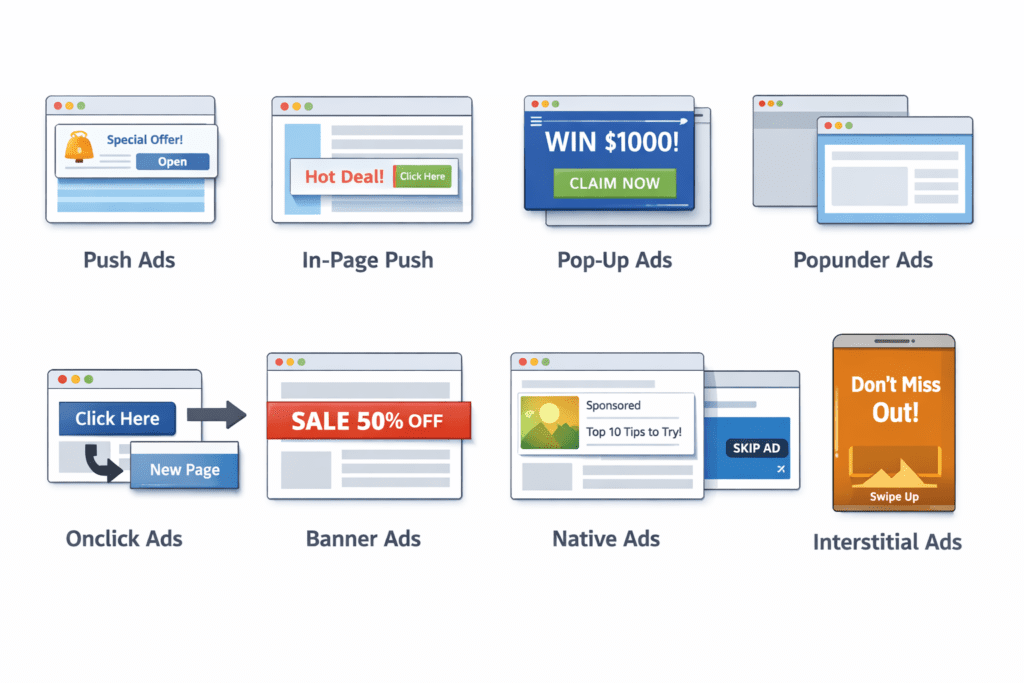
The right format depends on your funnel, budget, and the level of user intent you need. Push and pop traffic are commonly used for fast testing and volume, while native and video usually require stronger creatives and more developed landing flows. Use the table below to compare the main trade-offs.
| Ad format | Best for | Typical funnel fit | Main risks | Key settings to control |
|---|---|---|---|---|
| Push | Fast testing, broad GEO coverage | Direct + simple prelanders | Placement quality variance, fatigue | Frequency, zones, creative rotation |
| In-Page Push | Mobile reach without subscription | Direct + lightweight prelanders | Zone-driven results, CTR swings | Zones, device split, whitelist/blacklist |
| Pop-Up | Cheap volume, quick validation | Direct funnels, fast LP | Quality inconsistency, bot pockets | Zones, caps, strict targeting |
| Popunder | Scaling once funnel is proven | Direct or prelander → direct | Wasted spend without zone control | Zones, frequency, device/OS split |
| Onclick | High-volume redirect traffic | Direct funnels, minimal steps | Needs tight filtering and tracking | Zones, postback, fast blacklist ops |
| Banner | Broader coverage, less intrusive delivery | Direct + content-style LP | Banner blindness, creative dependency | Sizes, placements, frequency |
| Native | “Warmer” clicks, editorial angles | Prelander → direct / content funnels | Stricter review, higher CPC/CPM | Creatives, compliance, placements |
| Video | High-impact hooks and demos | Direct + strong above-the-fold | Creative cost, inventory variability | Placement type, device, load speed |
| Interstitial | High visibility on mobile | Direct funnels, single CTA | User fatigue, policy sensitivity | Frequency, placements, creative quality |
You can get a rough understanding of what these ads look like from this picture:
Payment and Bidding Models
| Model | How it works | Common use |
|---|---|---|
| CPM | You pay for every 1,000 impressions | Popunder, banner, native, video, and interstitial traffic |
| CPC | You pay when a user clicks the ad | Push, in-page push, native, and some display inventory |
| Smart CPC / Smart CPM | The platform adjusts bids using campaign performance signals | Automated optimization after enough data has been collected |
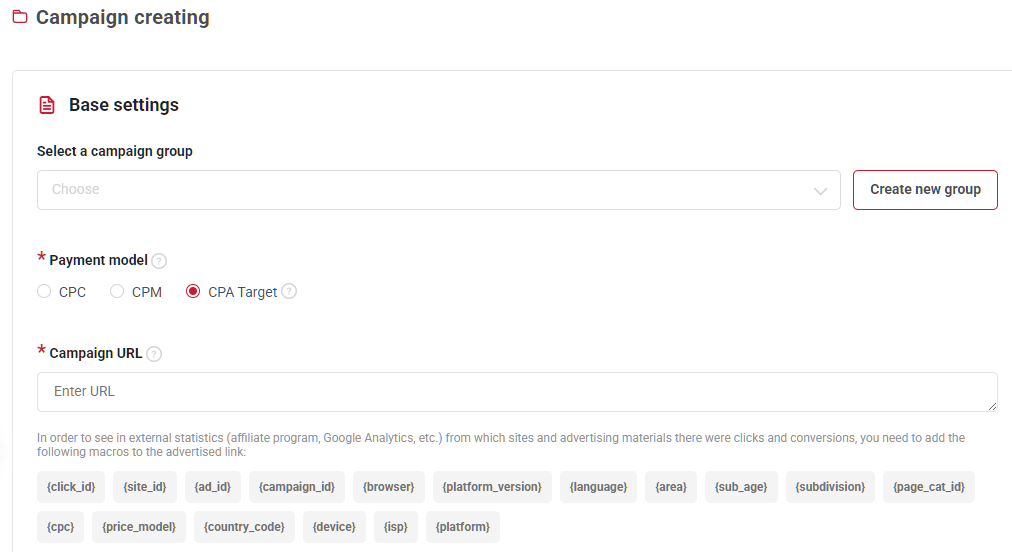
| Target CPA | You set a desired acquisition cost while the network optimizes bids toward it | Campaigns with reliable conversion tracking and sufficient conversion volume |
Target CPA does not always mean that you pay only for conversions. Many platforms still buy traffic through CPM or CPC auctions while using conversion data to adjust bids automatically.
How to Choose the Best Ad Network
Start with the traffic format and GEO you need, then compare how much control each network gives you over placements, tracking, targeting, and campaign optimization. A large network is not automatically the best choice if most of its volume is outside your target market or hidden behind limited reporting.
| Criterion | What to check | Why it matters |
|---|---|---|
| Format and GEO volume | Real traffic volume for your format, GEO, device, and OS | Worldwide coverage does not guarantee usable volume in your target segment |
| Placement transparency | Zone, site, app, or placement IDs in reports | You need source-level data to remove weak inventory and build whitelists |
| Targeting and optimization | Device, OS, browser, carrier, frequency caps, bid adjustments, and lists | More control lets you isolate profitable traffic instead of buying a mixed audience |
| Tracking support | S2S postback, conversion pixels, sub-IDs, and reliable reporting | Campaign decisions are unreliable without placement-level conversion data |
| Traffic quality controls | Anti-fraud filters, suspicious-source handling, and invalid-traffic policies | These tools reduce wasted spend and make traffic quality easier to verify |
| Pricing and billing | CPM or CPC rates, minimum deposit, payment methods, and refund terms | The billing setup must match your testing budget and payment workflow |
| Platform and support | Moderation speed, dashboard stability, exports, bulk tools, and support response | Operational problems can slow testing even when the traffic itself is suitable |
For a first test, shortlist two or three networks within the same ad format. Use the same offer, GEO, device segment, and similar creatives so you can compare traffic sources without changing too many variables at once.
Which Verticals Work Best With Ad Network Traffic?
Ad network traffic usually performs best when users can understand the offer quickly and complete a simple action, such as registering, installing an app, or making a first deposit. Results also depend on the GEO, ad format, landing flow, and the network’s current advertising policies.
| Fit | Typical verticals | What to consider |
|---|---|---|
| Strong fit | iGaming, betting, dating, adult, mobile apps, utilities, games, subscriptions | Simple conversion flows and high-volume testing usually work well with push, pop, and similar formats |
| Conditional fit | Nutra, health and beauty, finance, crypto, trading, ecommerce | Performance depends heavily on compliance, GEO, prelanders, and offer credibility |
| Harder to scale | B2B SaaS, enterprise products, high-ticket services, complex subscriptions | Long decision cycles and trust-heavy conversions usually require more education or retargeting |
How We Select and Rank Ad Networks
AffDays ranks networks within individual ad formats rather than comparing unrelated types of inventory. A platform can rank highly for push traffic but lower for native or popunder if its volume, controls, or reporting are stronger in one format than another.
Ranking Criteria
We evaluate usable traffic volume, GEO and device coverage, placement transparency, targeting and optimization tools, postback support, traffic-quality controls, moderation, billing terms, reporting, and overall platform usability.
Updates
Rankings may change when a network adds or removes formats, changes its minimum deposit, updates campaign controls, loses traffic volume, or develops recurring problems with reporting, moderation, or traffic quality.
Affiliate Disclosure
Some links on this page are affiliate links. Partnership status does not determine whether a network is included or where it appears in a format ranking.
Common Mistakes When Buying Traffic From Ad Networks
Tracking, test design, creative fatigue, and funnel issues cause many of the performance problems attributed to ad network traffic.
Launching Without Reliable Tracking
Set up conversion tracking, postback, and placement-level sub-IDs before spending meaningful budget. Click data alone cannot show which zones generate conversions or which placements should be excluded. Without source-level reporting, profitable and unprofitable inventory remains mixed together.
Running an Uncontrolled Test
A test becomes difficult to interpret when it includes several GEOs, devices, operating systems, offers, landing pages, and creative concepts at once. Start with a narrower segment, change one major variable at a time, and collect enough data across multiple placements before judging the network.
Ignoring Frequency and Creative Fatigue
Repeated exposure can reduce CTR and conversion rate even when the underlying traffic remains stable. Use frequency caps where available, monitor performance by creative, and prepare replacements before the original set is fully exhausted.
Applying the Same Expectations to Every Format
Push, native, popunder, video, and interstitial traffic differ in user intent, volume, pricing, and creative requirements. Inventory also varies between networks that sell the same format. Evaluate each source against the normal behavior of that format instead of expecting one campaign setup to work everywhere.
Blaming Traffic Before Checking the Funnel
Before rejecting a traffic source, verify that the landing page loads correctly on the targeted devices and browsers, that redirects and tracking parameters work, and that the offer is available in the selected GEO. Technical failures can make usable traffic appear unprofitable.
FAQ
An ad network sells traffic (impressions/clicks) across specific ad formats. An affiliate network aggregates offers and handles advertiser/affiliate relationships. On this page, we focus on ad networks as traffic sources.
For most affiliates, Push or In-Page Push is the easiest starting point because setup is simple, you can test angles fast, and budgets are easier to control compared to high-volume formats like popunder/onclick.
Base the test budget on your expected CPC and conversion rate rather than a fixed amount. Divide the average CPC by the expected conversion rate to estimate your acquisition cost. For example, a $0.05 CPC and a 1% conversion rate imply an estimated CPA of $5. Your budget should cover several conversions across multiple placements, not just the cost of one expected conversion. Native campaigns may also need additional room for creative testing.
Use placement-level reporting, S2S postback data, and the network’s anti-fraud tools. Review sources for abnormal click volumes, very short sessions, zero downstream engagement, or implausible conversion patterns. Exclude suspicious placements after enough data has accumulated rather than relying on CTR alone. Networks that hide placement IDs give you fewer ways to control low-quality traffic.
Sometimes, but it depends on the network, GEO, creatives, and policy rules. Expect stricter moderation and higher rejection risk in sensitive niches. Check the format-specific AffDays listings and the network’s current ad policy before launching.
The minimum deposit matters for testing, but it should not be the main selection criterion. A low entry threshold provides little value if the network lacks volume in your GEO, hides placement data, or does not support reliable conversion tracking.

Ratmir started his copywriting career back in 2016. He is now editor-in-chief with an MA with Honors in Linguistics.
His primary expertise is in affiliate marketing, EdTech, education, IT, and sports.
Ratmir specializes in content marketing, content management, proofreading, and translation.