

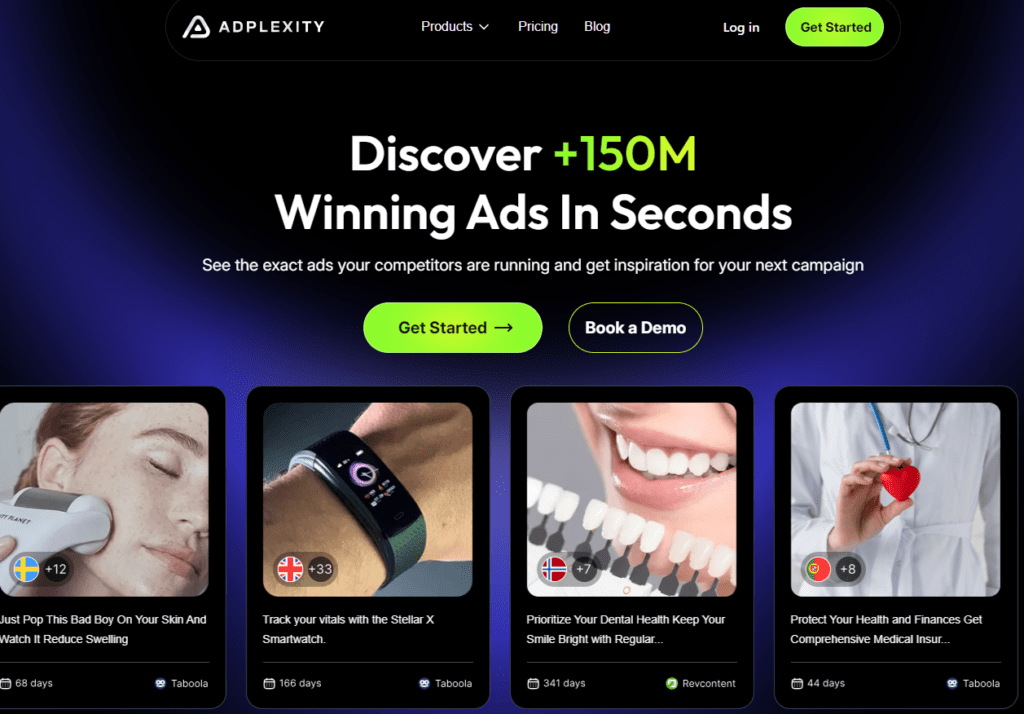
Spy tools help affiliates see which ads, landing pages, traffic sources, GEOs, and angles are already being used in the market. Below, we compare the best spy tools for affiliate marketing by traffic source coverage, research features, pricing, and practical use cases.
| # | Tool | Since | Sources | Pricing | Promo code | More |
|---|---|---|---|---|---|---|
| 1 |
 SpyOver
|
2017 |
Native ads (adult-only specialization) |
$149 — Professional plan $299 — Corporate plan for teams |
AFFDAYS30 (30% on the 1st month of payment) |
|
| 2 |
 SpyTeg
|
2019 |
Native ads Push ads |
$149 — Professional plan $299 — Corporate plan for teams |
AFFDAYS30 (30% on the 1st month of payment) |
What Are Spy Tools in Affiliate Marketing?
Spy tools are research platforms that collect and organize ads, landing pages, creatives, keywords, placements, and traffic data from different sources. Affiliates use them to understand what competitors are running, which angles appear repeatedly, which GEOs are active, and how campaigns are structured before spending money on tests.
A spy tool helps you find patterns, compare creatives, study landing pages, and build a more informed test plan — especially before entering a new market. For example, a native ad spy tool can show long-running advertorials in a specific GEO, while a push spy tool can help analyze icons, headlines, devices, and placements used in active campaigns.
How to Choose the Right Spy Tool
Choose a spy tool based on your traffic source, GEOs, and campaign workflow. A native ad spy tool is useful for advertorials and pre-landers, but it will not replace a Facebook, TikTok, PPC, or SEO research platform. Start with the channel you actually buy traffic from, then check whether the tool has fresh data for your target markets.
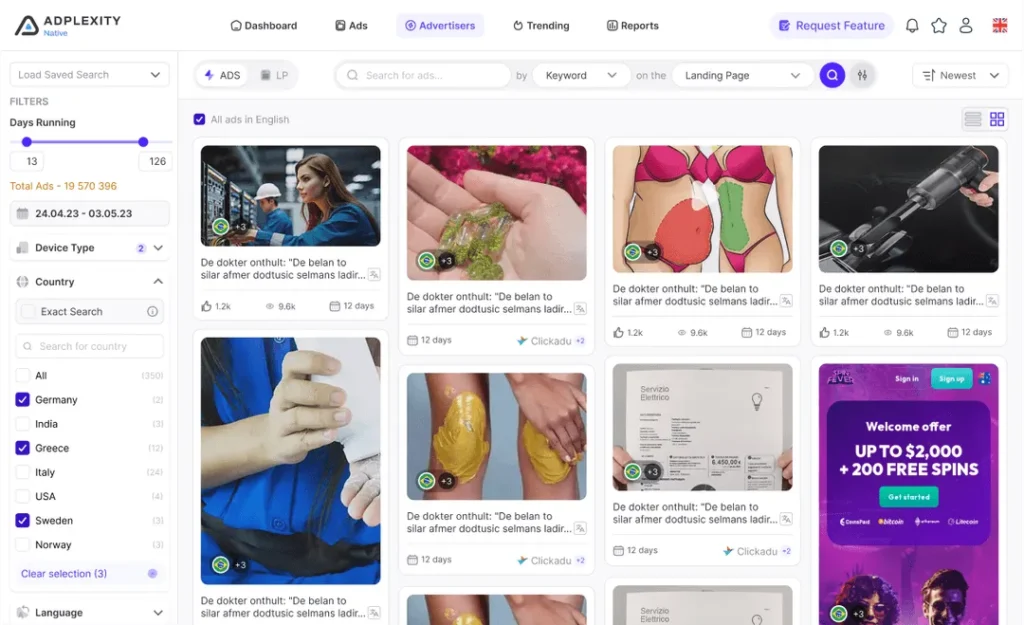
Pay attention to filtering depth. A good spy tool should let you filter by GEO, language, device, ad format, platform, keyword, date range, landing page, and campaign duration. Long-running ads are especially useful because they usually show that a creative or angle has survived testing, even though they do not prove exact profitability.
Also check landing page access, pricing, trial options, and update frequency. For affiliate campaigns, the best spy tool is not always the biggest one, but the one that helps you quickly find relevant creatives, angles, pre-landers, and competitor patterns for your own traffic source.
Spy Tools by Traffic Source
Different spy tools are built for different traffic sources, so it is better to choose a platform by channel rather than by the total size of its ad database. A tool for native ads, push traffic, Facebook, TikTok, PPC, or SEO will show different data, filters, creatives, and competitor signals.
For native ads, look for tools that show advertorials, pre-landers, widgets, GEOs, devices, and campaign duration. These details help affiliates understand which angles are used in long-running campaigns and how competitors structure the path from ad creative to landing page.
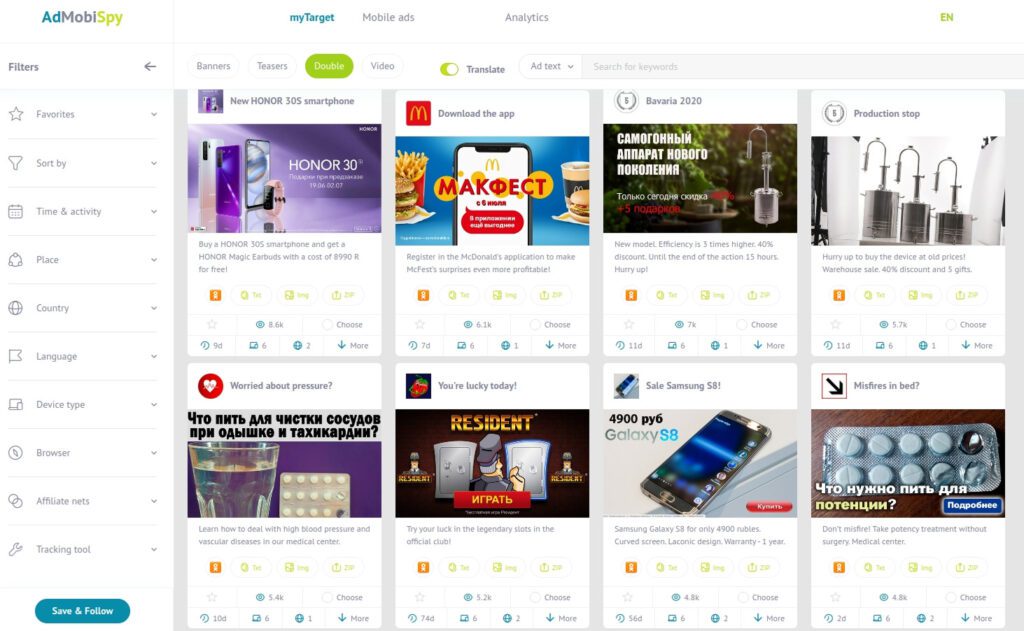
For push traffic, the most useful data includes icons, headlines, descriptions, devices, operating systems, placements, and GEO filters. Push campaigns often depend on small creative details, so the ability to compare active ads by country, device, and date range is especially important.
For Facebook and TikTok, spy tools should help analyze social creatives, video hooks, product angles, engagement signals, landing pages, and ecommerce trends. These channels move quickly, so update frequency and fresh creative data matter more than old archive size.
For PPC and search ads, the focus is different. Here, the most useful data includes keywords, paid competitors, ad copy, landing pages, traffic estimates, and search visibility. These tools are better for understanding demand, keyword competition, and how advertisers position offers in search results.
For SEO research, spy tools are usually closer to competitor analysis platforms. They help track organic keywords, ranking pages, backlinks, traffic estimates, and content gaps. This is useful when affiliates rely on search traffic, review pages, comparison pages, or long-term content assets.
What Spy Tools Can and Cannot Show
Spy tools do not show the full business side of a campaign. They usually cannot reveal exact ad spend, profit, conversion rate, approval rate, EPC, ROI, advertiser payout, or the private deal terms behind an offer. Even if an ad has been running for a long time, it does not automatically mean that the campaign is highly profitable.
This is why spy tool data should be treated as research input, not a ready-made campaign plan. Long-running ads, repeated angles, and active landing pages can point to useful patterns, but affiliates still need to test their own creatives, traffic settings, offers, GEOs, and compliance approach.
How We Selected the Best Spy Tools
We selected spy tools based on their traffic source coverage, GEO filtering, database freshness, landing page access, pricing transparency, trial availability, and practical value. Priority was given to tools that help with real campaign research, not just large but poorly filtered ad archives.
When evaluating each platform, we looked at how useful it is for finding active creatives, long-running ads, competitor landing pages, traffic patterns, and market-specific campaign examples.
FAQ
The best option depends on your traffic source. Native, push, TikTok, Facebook, PPC, and SEO campaigns need different databases, filters, and competitor signals.
Yes, if you already work with paid traffic and need faster research. Spy tools help find active creatives, landing pages, GEO patterns, and long-running ads before testing.
Yes, but mostly for basic research. Free tools usually have weaker filters, less historical data, and limited landing page access.
No. They do not show exact spend, ROI, EPC, conversion rate, approval rate, or private payout terms. Long-running ads are only a signal, not proof of profit.
For push traffic, look for tools with fresh push creatives, GEO filters, device and OS filters, placement data, and campaign duration.
No. Use spy tools to find angles, hooks, landing page structures, and competitor patterns, then adapt them to your offer, GEO, and traffic source.

Ratmir started his copywriting career back in 2016. He is now editor-in-chief with an MA with Honors in Linguistics.
His primary expertise is in affiliate marketing, EdTech, education, IT, and sports.
Ratmir specializes in content marketing, content management, proofreading, and translation.