Native ads are one of the main traffic formats for affiliate campaigns that need a warm-up before conversion. Instead of sending cold users straight to an offer, affiliates usually use native placements to push them into an advertorial, quiz, comparison page, review-style landing page, or pre-lander. Our explains how native ads work, what formats exist, how to choose the right platform, and how to run campaigns that actually convert.
- Key Takeaways
- What Are Native Ads?
- Types of Native Ads
- Sponsored Articles
- Recommended Content Blocks
- In-Feed Ads
- Native Video Ads
- Native Search Ads
- Promoted Listings
- Native Ad Formats at a Glance
- Pros and Cons of Native Ads
- Pros
- It Bypasses Ad Blindness
- Better Ad Blocker Resistance
- Higher Engagement Than Display
- Brand Safety Through Context
- Works for Both Publishers and Advertisers
- Cons
- Content Takes Time and Skill to Produce
- Platform Dependency
- Harder to Scale Across Creatives
- Attribution Can Be Messy
- How to Earn With Native Advertising
- As a Publisher
- As an Advertiser or Affiliate
- Best Practices for Running Native Ad Campaigns
- Match the Tone of the Platform
- Write Headlines That Earn the Click
- Set Clear KPIs Before You Launch
- Choose Platforms That Match Your Vertical
- Do Not Neglect the Landing Page
- Use Retargeting to Close the Loop
- Real Examples of Native Ads Done Right
- EvaDav + Gambling: Malaysia, Indonesia, Thailand — 250% ROI
- PropellerAds: Dating, Brazil, $5,934 / ROI 150%
- Best Native Ad Networks
- Network Profiles
- Taboola
- MGID
- EvaDav
- AdCash
- DatsPush
- Dao.ad
- Dable
- Native Ads
- RichNative
- Summary
Key Takeaways
- Native ads look like regular content on the site they appear on;
- Formats include sponsored articles, recommended content blocks, in-feed posts, video, and product listings;
- They get past ad blockers more reliably than banners and pop-ups;
- High engagement comes from matching the feel of the surrounding content;
- The main challenges are content production time, platform dependency, and harder scaling across creatives;
- Networks like Taboola, MGID, EvaDav, and Dao.ad cover a wide range of niches and budgets;
- Native ads work in CPA, CPC, and CPM models for both publishers and advertisers.
What Are Native Ads?
A native ad is a paid placement that matches the look and feel of the platform it appears on. If you see a block titled “Recommended reading” at the bottom of a news article, some of those links are native ads. They use the same fonts, card layout, and thumbnail style as the rest of the page.
The difference from a banner is context. A banner is placed outside the content flow and screams advertisement. A native ad sits inside it. Users scroll past it the same way they scroll past organic content, which means more of them actually read it.
This does not mean native ads are deceptive. Reputable platforms label them as “Sponsored,” “Promoted,” or “Partner material,” which makes the format transparent but non-disruptive.
Native ads are most common in:
- News and media sites;
- Blogs and editorial platforms;
- Social media feeds (Facebook, TikTok, LinkedIn);
- E-commerce and marketplace platforms;
- Search engine results pages.
Affiliate marketers use native ads when promoting offers that require some context before they are clicked. This works as a great warm entry point in the nutra, finance, gambling, dating, and insurance industries.
Learn also: how to use native ads in OnlyFans marketing.
Types of Native Ads
Native advertising covers several distinct formats. Understanding them helps you pick the right one for your vertical and audience rather than guessing.
Sponsored Articles
A sponsored article looks like a regular editorial piece on the platform. It has a headline, a body, images, and often a byline. The only signal that it is paid content is a small label, usually “Sponsored by” or “Partnership material.”

These work best when the content genuinely helps the reader. A well-written article about choosing a VPN, published on a tech blog and sponsored by an affiliate partner, provides real value while leading naturally to a conversion.
A common mistake is making sponsored articles too sales-heavy. The moment the content reads like a product page, readers tune out. Your goal is to answer a question or address a problem, then present the product as the natural next step.
Recommended Content Blocks
These are the widget blocks you see at the bottom or sidebar of articles, usually labeled “You might also like” or “Recommended for you.” Each card shows a headline and thumbnail, and clicking leads to a landing page or article.
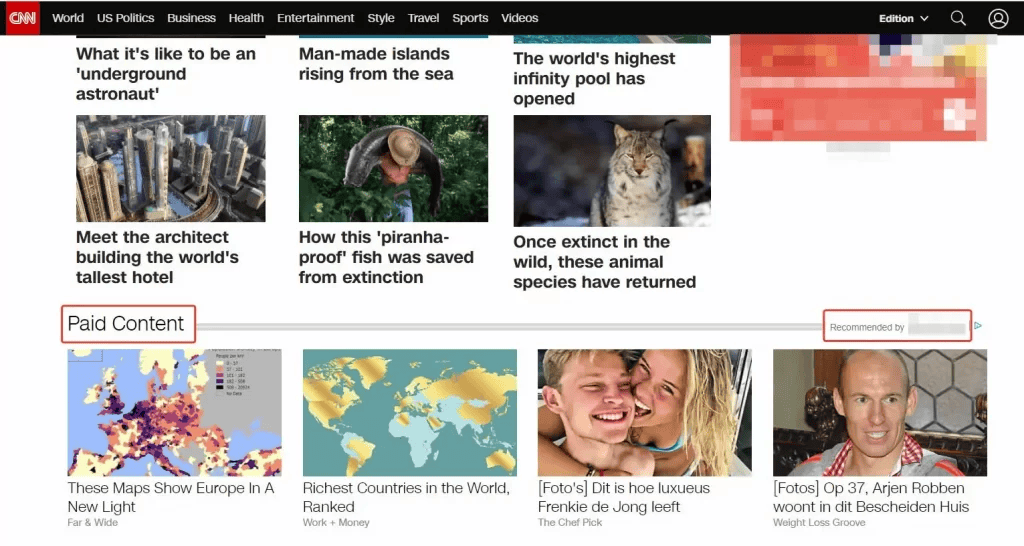
Platforms like Taboola and MGID operate primarily in this format. As an affiliate, you buy placements in these blocks and drive traffic from high-authority media sites to your offers. The cost is usually CPC (cost-per-click), meaning you pay only when someone clicks.
Headlines are critical here. You have roughly three seconds and a thumbnail to earn the click. The headline should create enough curiosity to click without being so misleading that the user immediately bounces.
In-Feed Ads
In-feed ads appear directly inside a content feed, whether that is a social media timeline, a news aggregator, or a homepage. They look like organic posts but carry a “Sponsored” tag.

Facebook, Instagram, LinkedIn, and TikTok all run in-feed native placements. On these platforms you have control over audience targeting, so you can layer in demographic, interest, and behavioral data on top of the native format.
The ad behaves like a post: users can like, share, or comment. That social interaction adds organic reach on top of your paid placement, which is a meaningful advantage over static display.
Native Video Ads
Native video plays inside content rather than as a pre-roll or interstitial that interrupts it. On TikTok and Reels, it resembles organic short-form video. On YouTube, it can look like a creator’s own review segment.
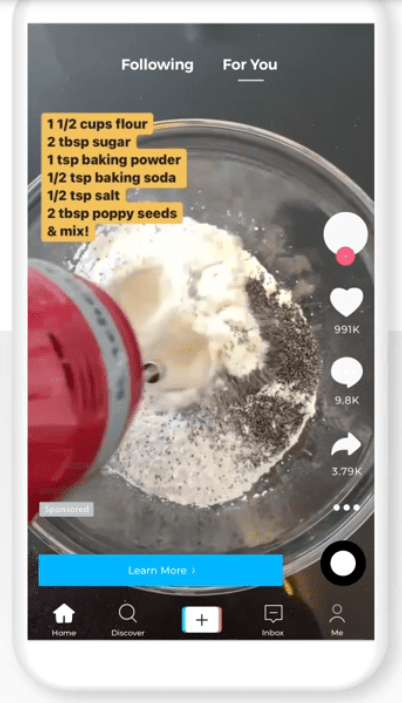
The best native video does not feel like an ad at the start. It hooks with a story, useful information, or entertainment, then works the product in naturally. A skincare brand showing a morning routine before mentioning their product is a classic example.
Native video tends to perform well for offers that need demonstration: supplements, software, fitness equipment, or any product where showing beats telling.
Native Search Ads
Native search ads appear in search results styled to match organic listings. They show a headline, URL, and short description, the same as any other result, with a small “Ad” label.
Google Search ads are the most obvious example, but platform-specific searches like Amazon, Etsy, or App Store ads follow the same logic. The audience is warm because they are already looking for something related to your offer. Click-through rates are generally higher than in cold-traffic native formats.
Promoted Listings
Promoted listings appear in marketplace or e-commerce search results above organic products. They match the card layout of surrounding items but sit at the top of the page.
Amazon Sponsored Products is the most widely used version, but the format exists in Etsy, eBay, Booking.com, and niche marketplaces. If you run a product-focused affiliate campaign, promoted listings let you reach buyers at the moment of intent.
Native Ad Formats at a Glance
Here is a quick reference to help you match format to use case:
| Format | Placement | Best Verticals | Pricing Model | Traffic Temp |
|---|---|---|---|---|
| Sponsored Article | Media / Blog | Finance, Nutra, iGaming | CPM / Flat fee | Warm |
| Recommended Content | Media sidebars | Broad niches | CPC | Cold to warm |
| In-Feed Ad | Social media | E-commerce, Apps, Dating | CPM / CPC | Cold to warm |
| Native Video | Social / Video platforms | Fitness, SaaS, Supplements | CPV / CPM | Cold |
| Native Search | Search results | Any intent-based niche | CPC | Hot |
| Promoted Listings | Marketplace | E-commerce, Travel | CPC / CPA | Hot |
Pros and Cons of Native Ads
Every traffic source has tradeoffs. Native ads are no different.
Pros
It Bypasses Ad Blindness
Display advertising has a well-documented problem. Users have trained themselves to ignore rectangular boxes on web pages. Eye-tracking studies show that banners in standard positions often receive zero attention, even from engaged readers.
Native ads do not trigger that reflex because they do not look like ads. They appear as part of the page structure. A reader scanning a news article treats the recommended content block the same way they treat the related articles section: potentially interesting, worth a glance.
Better Ad Blocker Resistance
A growing portion of your potential audience runs an ad blocker. In some demographics and regions, blocker adoption is above 40%. Standard display and pop-under ads are blocked at the network level. Native ads, particularly those embedded as editorial content or recommendation widgets, are far less likely to be filtered.
This does not mean native ads are completely blocker-proof, but the hit rate is lower. This matters for affiliates working in niches where the audience tends to be more tech-savvy (crypto, software, VPNs).
Higher Engagement Than Display
Users interact with native ads at higher rates than banners across the board. Dwell time is longer, bounce rates tend to be lower, and click-through intent is stronger because users chose to engage rather than accidentally mousing over a banner.
For affiliate campaigns where you need users to read and understand an offer before converting, the extra engagement time is directly valuable.
Brand Safety Through Context
When you place an ad on a reputable media platform, the authority of that platform transfers to your message. A financial offer placed on a respected news site inherits some of that credibility in the user’s mind. This is harder to achieve with programmatic display, where your banner might appear next to questionable content.
Works for Both Publishers and Advertisers
If you run a content site, you can monetize it through native ad networks without interrupting your readers with pop-ups. The ad revenue comes from content recommendations that feel native to the page. If you are an advertiser, you access that same engaged, trusting audience.
Cons
Content Takes Time and Skill to Produce
A banner needs only a designer and a tagline. A native article needs a writer who understands the niche, knows how to structure an editorial piece, and can weave in the product without making it feel forced. That is harder and slower than creative production for display.
This compounds if you are running multiple campaigns across different verticals. A gambling content piece needs a different tone than a nutra article, and both need to match the publication they appear on.
Platform Dependency
Each native network has its own approval process, creative requirements, and moderation rules. A campaign that runs fine on one platform may get rejected on another. For grey or black-hat verticals, this is a constant friction point. You are always one policy update away from a paused campaign.
Harder to Scale Across Creatives
With display ads, you can run dozens of banner variations simultaneously. With native articles or sponsored content, scaling means creating more unique content, not just resizing assets. That limits how fast you can test and iterate.
Attribution Can Be Messy
When a user reads a sponsored article, leaves, then converts three days later through another channel, which source gets credit? Native’s contribution is often underrepresented in last-click attribution models. You need to set up view-through tracking or use multi-touch attribution to see the full picture.
How to Earn With Native Advertising
There are two sides to native advertising in affiliate marketing: buying traffic and selling it. Which side you are on determines your approach.
As a Publisher
If you own a content site with decent traffic, you can join a native ad network as a publisher. The network places recommendation widgets or sponsored content blocks on your pages, and you earn a share of the revenue generated by clicks or impressions.
The more engaged your audience and the more relevant your niche, the better your RPM (revenue per thousand impressions). A personal finance blog will earn more per visitor than a generic news aggregator because the audience has higher purchase intent.
Most networks have a minimum traffic threshold. Taboola, for example, requires 500,000 monthly page views. Smaller networks like Dao.ad or EvaDav have lower minimums, making them more accessible for mid-sized sites.
As an Advertiser or Affiliate
As an advertiser, you buy placements on native networks and send traffic to landing pages or offers. Your profit comes from the gap between what you pay for clicks and what you earn per conversion.
Three models are most common in affiliate native campaigns:
- Direct product promotion: you promote your own product or an affiliate offer. Each sale or lead generates a commission.
- CPA media buying: you buy native traffic at CPC rates and monetize it through a CPA affiliate program. If you pay $0.20 per click and earn $40 per sale at a 1% conversion rate, the math works.
- Media buying: you buy cheap native traffic and send it to a page monetized with display ads, push subscribers, or a higher-paying native network. The margin is the difference between buy and sell CPM.
Native ads work particularly well in niches where users need context before converting: nutra supplements, online gambling, personal finance, dating, and e-commerce. A cold user who reads a well-written article about stress and sleep is much more likely to buy a supplement than the same user who sees a banner.
Best Practices for Running Native Ad Campaigns
What should affiliates keep in mind before starting a native campaign?
Match the Tone of the Platform
Before you write a word of copy, spend time reading the platform where your ad will appear. What does the content sound like? How formal or casual is the writing? What kind of headlines get featured?
A sponsored article on a serious financial news site needs measured language and cited facts. The same offer promoted on a lifestyle blog can afford humor and a more casual register. Mismatching tone is one of the fastest ways to kill CTR.
Write Headlines That Earn the Click
Your headline is doing most of the work in a native placement. It has to compete with every other recommended article in that widget, and it has to do so in eight to twelve words.
Headlines that work tend to be specific and create a clear sense of what the reader will get. “How I Cut My Energy Bill By 40%” outperforms “Save Money on Utilities” because it is concrete and implies a personal story. Numbers, questions, and mild curiosity gaps consistently outperform generic benefit statements.
Test at least five headline variants per campaign before declaring a winner. The difference between a 0.3% and 0.8% CTR on the same spend can entirely change campaign profitability.
Set Clear KPIs Before You Launch
If your goal is cost per lead, set a target CPA and kill traffic sources that exceed it after 200-300 clicks.
If you are optimizing for ROAS, track post-click revenue.
Without a clear metric to optimize against, you will end up staring at a dashboard full of data and not knowing what to do with it.
Choose Platforms That Match Your Vertical
Not every native network accepts every offer, so check the network’s accepted categories first. Gambling, adult content, and crypto face restrictions on most mainstream platforms but are welcome on others.
Geo also matters. Some networks have strong traffic in Western Europe and North America but thin coverage in Southeast Asia or LatAm. If your offer converts primarily in Tier 2 geos, pick a network with density there.
Do Not Neglect the Landing Page
The native ad gets the click. The landing page makes the conversion. A persuasive sponsored article that dumps users on a slow, generic landing page will waste your media spend.
Your landing page should continue the story the ad started. If the sponsored article talked about sleep quality, the landing page should open with sleep, not with a generic product hero shot.
Use Retargeting to Close the Loop
Most native traffic does not convert on the first visit. Users read your article, get interested, and then get distracted. Retargeting lets you follow up with users who engaged with your content but did not convert.
Set up Meta Pixel on your landing page, build a retargeting audience, and serve a direct response ad to those users. They already know your offer, so the second touchpoint can be more sales-forward than the initial native placement.
Real Examples of Native Ads Done Right
Looking at campaigns from the verticals that actually run native ads at scale gives you a clearer picture of what good looks like in practice.
EvaDav + Gambling: Malaysia, Indonesia, Thailand — 250% ROI
This case study is described by an experienced affiliate marketer in the iGaming industry. He knew the vertical, was comfortable juggling multiple geos, and had worked with EvaDav previously — but only on push. This was his first time running native ads on the network.
He picked three geos: Malaysia ($0.011 bid), Indonesia ($0.007), and Thailand ($0.017). Not the cheapest bids, but the traffic quality justified the rates — leads started coming in from the first few thousand impressions at a price that made sense.
The landing page was intentionally simple: name, age, phone, email. Nothing that would slow down the funnel. Before running it at scale, he tested a couple of pre-lander variations and let the data pick the winner.
Creatives got the same treatment. He knew that localized visuals outperform generic ones in Asian geos, so the ads featured Asian women with roulette and jackpot visuals. His reasoning was simple: if the creative does its job, the user arrives at the landing page already half-sold.

Results for the campaign period:
- Spend: $1,568;
- Impressions: ~100 million;
- Clicks: 100,000+;
- Leads: ~400;
- Revenue: $5,538;
- Net profit: $4,000;
- ROI: 250%.
The CTR and CR were not record-breaking, and that is normal for Asian mobile traffic, where connection quality and user behavior work against you. But the volume compensated. At these bid levels, buying 100 million impressions is not expensive, and when the funnel converts even modestly, the math holds.
PropellerAds: Dating, Brazil, $5,934 / ROI 150%
The affiliate who ran this one was not a seasoned media buyer mapping out a grand strategy. He picked Brazil because it was cheap, grabbed a mainstream dating offer from CPAmatica called OiSecret, and got to work. The offer paid per deposit. That is a harder conversion to hit, but the payouts were high enough to justify it: $60 for the first male deposit when the campaign launched.
He built one creative targeted at men only, and ran it across all campaigns. No elaborate testing matrix, no rotation of ten different angles. One image, one ad, across everything. It worked well enough that he never felt the need to swap it out.

The payout structure shifted pretty quickly. After the first two weeks of traffic, the affiliate network dropped the rate from $60 to $40, then to $29, and eventually to $21. Once enough data came in on which cities were actually converting, the network moved to a geo-split model: $26.40 per deposit for Rio de Janeiro, São Paulo, and Brasília, and $9.60 for everywhere else.
That kind of mid-campaign payout cut is common with dating offers in Brazil, as the network sees what is working and adjusts accordingly. The affiliate just had to make sure his traffic costs stayed low enough to stay profitable at the new rates.
The format was PropellerAds’ native ads placement. The campaign ran CPC first to identify which ad zones were worth keeping, then flipped to CPM on the zones that were converting — a standard sequencing move that lets you buy impressions much cheaper once you know where your audience actually is.
A short blacklist of non-converting zones was put together as the campaign ran, but it stayed minimal. Brazil is one of those geos where even mediocre targeting tends to generate some volume, so the affiliate did not over-optimize.
Female deposits were also accepted at $18 each, but the affiliate’s creative was aimed at men from the start, so those conversions were incidental. The campaign ran until the math stopped making sense, which is about as clean an exit strategy as it gets.
Results for the campaign period:
- Revenue: $5,934;
- ROI: 150%;
- Geo: Brazil (Rio, São Paulo, and Brasília pulling the most weight);
- Offer: OiSecret by CPAmatica (pay-per-deposit);
- Format: Native ads on PropellerAds.
Best Native Ad Networks
The network you choose determines your access to traffic, moderation flexibility, and minimum budget requirements. Here are the main players worth knowing.
| Network | Min. Budget | Best For | Niches | Key Feature |
|---|---|---|---|---|
| Taboola | $500+ | Large brands | Broad / premium | Premium media placements |
| MGID | $100 | Affiliates, mid-size | Finance, Nutra, Entertainment | 3000+ partner sites, retargeting |
| EvaDav | $25 | Grey/black niche affiliates | Adult, Dating, Sweepstakes | Soft moderation, live support |
| AdCash | $100 | Performance affiliates | Gaming, Entertainment | Auto-optimization, wide geo |
| DatsPush | $50 | Volume buyers | Gambling, Crypto, Betting | Large subscriber base, retargeting |
| Dao.ad | $10 | Beginners, small teams | Gaming, Mobile, E-commerce | Lowest entry, clean interface |
| Dable | $200 | Asian market focus | Broad | No.1 content platform in South Korea |
| Native Ads | $100 | Beginners | Nutra, Finance, Education | Custom widgets, low threshold |
| RichNative | $200 | Intermediate affiliates | Nutra, Finance, Software | Detailed reporting, volume focus |
Network Profiles
Taboola
Taboola sits at the top of the market in terms of publisher quality. It works with The Weather Channel, MSN, USA Today, and hundreds of other major media properties. If you have the budget and a campaign that passes moderation, you get access to genuine premium traffic.

The tradeoff is cost and process. Taboola’s minimum spend is higher than most networks, and the approval process is strict. Grey or black-hat verticals are not a fit here. If you are running compliant offers in mainstream niches with serious budgets, Taboola delivers scale.
MGID
MGID is one of the older native networks and has built up a broad publisher base of 3,000+ sites. It offers retargeting, a variety of ad formats, and reasonably accessible entry with a $100 minimum. It works well for the nutra, finance, and entertainment verticals.
EvaDav
EvaDav is one of the better options if you are working in adult, dating, or sweepstakes. The moderation is softer than mainstream networks, traffic quality is consistent, and support is actually responsive.

If your offers sit in grey or black-hat territory and you need a platform that will not reject your campaigns on sight, EvaDav is worth testing.
AdCash
AdCash covers a wide geographic range and supports multiple ad formats, including native ads, push, pop, and interstitials. Its automated optimization adjusts bids and placements based on performance, which reduces manual work during campaign scaling. It performs particularly well for gaming and entertainment verticals.
DatsPush
DatsPush has built a large push subscriber base and uses it for native distribution as well. It is a strong choice for high-volume campaigns in gambling, crypto, and betting. The analytics are solid, retargeting is available, and 24/7 support means problems get resolved without waiting.

Dao.ad
Dao.ad has the lowest entry point on this list at $10. That makes it genuinely accessible for beginners who want to test native ads without committing a significant budget. The interface is clean, traffic is stable, and the focus is on gaming, mobile apps, and e-commerce.
Do not expect Taboola-level reach, but for learning the format it is a practical starting point.
Dable
Dable dominates the South Korean market and is expanding across Southeast Asia. If you are targeting the Asian region and need a platform with deep local publisher relationships, Dable is the right choice.

Its recommendation engine adjusts placements automatically based on user behavior, which reduces the need for manual optimization.
Native Ads
The Native Ads network is beginner-friendly with a clean interface, custom ad widget options, and solid analytics. It works well for the nutraceutical, finance, and education verticals. The minimum spend is accessible, and support is available to help new advertisers set up their first campaigns.
RichNative
RichNative targets intermediate affiliates who want strong optimization tools and detailed reporting without the enterprise-level price tag. It handles nutra, finance, education, and software well and has enough volume for campaigns that need to scale beyond initial test budgets.

Summary
The format works when the campaign has enough margin to warm up the user before the conversion: through an advertorial, quiz, review page, comparison page, or other pre-lander.
For affiliates, the main choice is not just “which network is cheaper,” but whether the network fits the offer, GEO, moderation risk, and funnel type. Taboola and MGID make more sense for cleaner finance, e-commerce, nutra, and mainstream campaigns. EvaDav, PropellerAds, DatsPush, and similar platforms are usually more practical for grey verticals, dating, gambling, sweepstakes, and aggressive testing.
The campaigns that survive are usually not the ones with the prettiest copy. They are the ones where the headline, thumbnail, pre-lander, offer, GEO, and payout model all match the same user intent.

Ksenia has extensive hands-on experience in affiliate marketing, having worked as a media buyer and affiliate for several years across multiple verticals. Throughout her career, she managed traffic from a wide range of sources, tested funnels, and collaborated directly with advertisers and networks.
For the past six years, she has also been writing in-depth articles, reviews, and analytical guides about affiliate marketing. Her work has appeared on well-known industry blogs and platforms, where she covers topics such as traffic sources, compliance, creatives, tracking, and campaign optimization.
Today, Ksenia combines practical experience with editorial expertise, contributing as a guest expert to various affiliate marketing projects and helping educate both beginners and experienced affiliates.

Ratmir started his copywriting career back in 2016. He is now editor-in-chief with an MA with Honors in Linguistics.
His primary expertise is in affiliate marketing, EdTech, education, IT, and sports.
Ratmir specializes in content marketing, content management, proofreading, and translation.