The global iGaming market is expected to reach $125.6 billion by 2027, making it one of the largest verticals in affiliate marketing. However, campaign performance varies sharply by GEO, operator, traffic source, and the restrictions imposed by regulators and advertising platforms.
iGaming affiliate marketing includes both regulated promotion and grey- or black-hat acquisition methods. The approach used depends on the GEO, operator, traffic source, and the level of regulatory and platform restrictions.
- Key Takeaways
- iGaming Affiliate Marketing Basics
- Why Choose the Gambling Vertical?
- Types of Gambling Offers in Affiliate Marketing
- CPA, RevShare, and Hybrid Models
- How iGaming Affiliate Marketing Works
- From Click to Approved FTD
- Tracking and Attribution
- Key iGaming Metrics
- Target Audience in the Gambling Vertical
- Tier 1, Tier 2, and Tier 3 Countries
- Regulatory Issues
- Typical Portraits of Online Casino Players
- Traffic Sources & Funnels in iGaming Marketing
- Telegram Funnels
- ASO Strategies
- Almost Free Traffic
- SEO Casino Marketing
- Paid Acquisition
- Social Media and Influencer Marketing
- Email Marketing
- Summary
- FAQ
Key Takeaways
- iGaming promotion includes regulated campaigns, offshore marketing, and grey- or black-hat acquisition methods.
- Use native ads for Tier 1 markets, and focus on banner ads and promotions for Tier 2-3 countries;
- Localize creatives, payment options, and messaging to improve conversion rates in each GEO;
- Telegram funnels are the leading trend for iGaming marketing in 2026-2027;
- Campaign performance should be measured by registrations, qualifying FTDs, EPC, approval rate, and ROI—not clicks alone.
iGaming Affiliate Marketing Basics
iGaming affiliate marketing involves promoting online casinos, sportsbooks, poker rooms, lotteries, and related products in exchange for CPA, RevShare, or Hybrid commissions. Campaigns may run through regulated advertising channels, alternative traffic sources, or methods designed to bypass platform restrictions.
Why Choose the Gambling Vertical?
Gambling is one of the largest niches in affiliate marketing. The iGaming market is immense and ensures you get a global reach.
Revenue-share rates are often in the 25-35% range of net gaming income. These rates are much higher than in other industries. Some examples of the best revshare rates are:
- PIN-UP partners: 50%;
- Batery Partners: up to 55%;
- GamblingCraft: 50%.
You can learn more about the best gambling affiliate programs & networks on AffDays.
Types of Gambling Offers in Affiliate Marketing
If you’re new to iGaming marketing, then you must understand the types of offers in this niche. Gambling offers can be classified by product type and commission model. The main product categories are listed below.
| Subcategory | Description |
| Online casinos | The most popular and competitive segment in iGaming. Affiliates promote platforms that offer slot machines, roulette, blackjack, baccarat, and live dealer games. |
| Sportsbooks | These platforms allow betting on sports events like football, basketball, tennis, cricket, and eSports tournaments. |
| Poker rooms | Focused on multi-table tournaments, Sit & Go’s, and cash games. The audience is smaller than casino or sportsbook players but often highly engaged and loyal, with repeat play. |
| Bingo & lotteries | These products target a more casual audience, often skewing older and more female compared to casino or sportsbook players. Bingo and lottery offers usually have lower payouts but can convert well due to their accessibility. |
| Crypto casinos | Crypto casinos accept cryptocurrency deposits and withdrawals and may offer faster payment processing or lighter verification, depending on the operator and GEO. They are often promoted in markets where card payments are restricted or where crypto adoption is high. |
CPA, RevShare, and Hybrid Models
There are three common commission models in iGaming affiliate marketing. You’ll either make money on user actions or profit from their losses. Some programs offer a combination of both models.
| Model | Description |
| CPA | You are paid a fixed one-time commission when a referred player completes a qualifying first-time deposit under the program’s terms. Expect around $50–500+ per acquisition depending on country regulations and traffic quality. |
| Revshare | You receive a percentage of the net gaming revenue generated by referred players. The exact calculation may include deductions for bonuses, payment fees, gaming-provider costs, taxes, and administrative expenses. |
| Hybrid | A combination of CPA and revenue share, offering a certain guarantee with long-term upside. For example, this could be $100 CPA with 20% revshare. |
Before choosing a program, check the qualifying FTD conditions, NGR deductions, negative carryover, minimum payout, payment schedule, accepted GEOs, and allowed traffic sources.
How iGaming Affiliate Marketing Works
A typical iGaming affiliate funnel looks like this:
Traffic source → Ad, channel, or content page → Operator → Registration → Qualifying FTD → Approval → CPA or ongoing RevShare
The exact path depends on the traffic source. SEO users may visit a casino review before clicking through to the operator, while push, popunder, social media, or Telegram traffic may pass through a pre-lander, bot, channel, or app. The affiliate earns when the player completes a qualifying action or generates revenue covered by the program’s commission terms.
From Click to Approved FTD
When a user follows an affiliate link, the operator assigns the click to the referring partner. A completed account creation is recorded as a registration, but registrations alone usually do not generate a CPA payout.
FTD means first-time deposit—the first qualifying deposit made by a newly referred player. Whether an FTD is approved may depend on the minimum deposit, accepted GEO and payment method, account validity, fraud checks, and compliance with the program’s traffic rules.
Some programs also apply additional activity or traffic-quality requirements when approving conversions or determining the final CPA rate. Affiliates should therefore distinguish between recorded FTDs and approved FTDs.
A conversion may be rejected when the user already has an account, provides false details, comes from an excluded GEO, fails fraud checks, or was acquired through a restricted source. Approval rates may also fall when the affiliate uses incentivized traffic or acquisition methods that were not approved by the program.
Under CPA, the affiliate receives a fixed payment for an approved conversion. Under RevShare, earnings depend on the player’s subsequent activity and the program’s NGR calculation.
Tracking and Attribution
Affiliate links contain an identifier that connects the referred player to the partner. Sub-IDs help affiliates compare GEOs, traffic sources, creatives, advertising accounts, pre-landers, and placements within the same offer.
For paid and multi-source campaigns, affiliates often connect the program to an external tracker through a postback or server-to-server tracking integration. Depending on the events supported by the program, this can show which campaign generated a registration, FTD, or approved conversion.
Statistics may differ between the traffic source, tracker, and affiliate dashboard because these systems can use different attribution rules, time zones, reporting delays, and duplicate filters. The operator’s dashboard normally determines which conversions are used for the final payout.
Key iGaming Metrics
| Metric | What It Shows |
|---|---|
| Registration rate | The share of clicks that result in a new account |
| Reg-to-FTD rate | The share of registered users who make a qualifying first deposit |
| FTD approval rate | The share of recorded FTDs accepted by the program |
| EPC | Average affiliate revenue generated per click |
| Cost per approved FTD | The traffic cost required to acquire one approved depositor |
| ROI | Campaign profit or loss relative to traffic and operating costs |
For RevShare campaigns, affiliates should understand how the program calculates NGR and which bonuses, payment fees, taxes, and other deductions reduce the commission base.
Cheap clicks and registrations do not guarantee profit: users may fail to deposit, FTDs may be rejected, or RevShare revenue may remain low. Before scaling, compare traffic costs with approved revenue and analyze the results by GEO, source, creative, and landing page.
Target Audience in the Gambling Vertical
Knowing your target audience is a core element of your iGaming affiliate marketing system. You must understand what motivates people to sign up, their expectations, and economic contexts to create appropriate ads that convert. Let’s take a general look at this matter.
Tier 1, Tier 2, and Tier 3 Countries
Countries are theoretically divided into three tiers based on their purchasing power and regulatory requirements:
- Tier 1 countries: users expect secure payment methods, clear licensing, and premium branding. They respond well to trust-based marketing. Bonuses are important, but reputation and compliance matter more. However, because of the strict regulatory limitations and privacy concerns, many players move to offshore casinos. Most affiliate networks work with these too.
- Tier 2 countries: users are bonus-driven and mobile-first, using local payment methods for convenience. Players are responsive to flashy creatives, sports tie-ins, and seasonal promos.
- Tier 3 countries: users tend to use low-stakes betting, prepaid cards, mobile wallets, or even cryptocurrency due to lack of traditional banking access. They are highly price- and bonus-sensitive, often motivated by lotteries and small-stake sports bets.
Regulatory Issues
There also are some unique traits that you must know from each area.
Gambling is heavily restricted in South Korea, Japan, the United Arab Emirates, and many other countries. That doesn’t mean it disappears: many players use online casinos registered abroad. South Korea’s iGaming market alone was estimated at $9 billion in 2024 and continues to grow.
In the CIS region, Russia leads the advertising market by reaching $11.4 billion in 2024. You’ll have to use VK Ads (myTarget), Yandex ads, and Telegram channels to succeed in this area. All these services work in all CIS countries but Ukraine, which recently banned the usage of VK and Yandex, using Telegram and Meta’s social media products.
Russia requires extensive localization and compliance with local policies with the introduction of ad bans for “foreign agents.” Ukraine’s market is actively fighting iGaming advertising and uses significant fines for influencers promoting gambling. Kazakhstan, one of the key markets, is considering a similar approach as well.
Affiliates work around these regulations by using multiple strategies.
| Tier | Country Examples | Average Payouts | Difficulty |
| Tier 1 | Australia, Austria, Belgium, Canada, the Czech Republic, Denmark, Finland, France, Germany, Italy, the USA, and others. | CPA: $200-300; Revshare: 40-50%. | High: strict regulations and high traffic costs. |
| Tier 2 | Greece, Hong Kong, Hungary, Japan, Latvia, Lithuania, Macedonia, Malta, Moldova, Monaco, Turkey, Ukraine, the United Arab Emirates, and others. | CPA: $30-100; Revshare: 15-30%. | Medium: moderate traffic costs and responsive audience. |
| Tier 3 | Colombia, Comoros, Costa Rica, Congo, El Salvador, Ecuador, Egypt, Dominican Republic, Ethiopia, Gabon, India, Kazakhstan. | CPA: $1-10; Revshare: 15-20%. | Low: cheap traffic, huge audience, bonus-sensitive players. |

Typical Portraits of Online Casino Players
Successful online casino affiliate marketing requires you to know your audience’s preferences better than anyone else. Common audience segments found across iGaming GEOs include:
Casual players. They gamble for fun and relaxation. They are responsive to free spins, small deposit bonuses, and gamified experiences. Found across all tiers, but especially common in Tier 1 and Tier 2 markets where gambling doubles as entertainment.
High rollers. They spend thousands per month and expect exclusive perks, personalized support, and loyalty programs. More common in Tier 1 countries where disposable income is higher.
Sports bettors. They place wagers tied to football, basketball, cricket, eSports seasons, and others. Highly responsive to real-time promotions, odds boosts, and event-driven campaigns.
Crypto enthusiasts. This is the younger demographic drawn by fast payouts, anonymity, and no KYC policies. Highly active in Tier 2 (LatAm, Asia) and Tier 3 (Africa, South Asia), where traditional payment restrictions are common.
Problem gambling and vulnerable players. One big issue across all markets and players is gambling addiction. For example, India has 140 million active players who regularly take part in iGaming activities. These numbers reach 340+ million during seasonal events and championships. Casinos use various methods to limit addiction:
- KYC checks to ensure players are of legal age and don’t use multiple accounts;
- Self-exclusion capabilities that allow players to limit their sessions manually;
- Deposit limits and cooldown periods to prevent overspending.
These measures are primarily enforced by local laws and regulations.
Traffic Sources & Funnels in iGaming Marketing
Let’s take a look at the best iGaming digital marketing approaches.
Telegram Funnels
Telegram is the third most downloaded messenger in the world, with over 1 billion monthly active users.
Based on various estimates, it’s most popular in:
- India;
- Russia;
- United States;
- Indonesia;
- Brazil;
- Vietnam;
- Ukraine;
- Kazakhstan;
- France;
- United Kingdom, and others.
Telegram is widely used in iGaming because channels, communities, bots, and repeated promotional messages can be combined within one platform. The main point is that you get everything you need to move the user across the sales funnel in one single application.
Let’s take a look at a typical Telegram marketing funnel.
1. Create Channels for Different Sources
Telegram is known for blocking accounts and channels working within grey niches, and gambling content falls right into this category. Grey-hat teams often maintain backup accounts and channels because gambling-related resources may be suspended or removed. We share how to automate Telegram account creation in bulk with special software in our previous guide.
You should create several types of channels:
- A public channel with news, promotions, and everything else like your casino’s typical social media;
- A private channel with user reviews and payout screenshots;
- A community channel for users to communicate (optional).
Creating these channels is necessary to obtain user trust. If they see that the casino has many active users and regularly publishes content, they are more likely to make a deposit. Most casinos use their public channels to share promotions and news. Here’s an example from a casino’s Telegram channel.
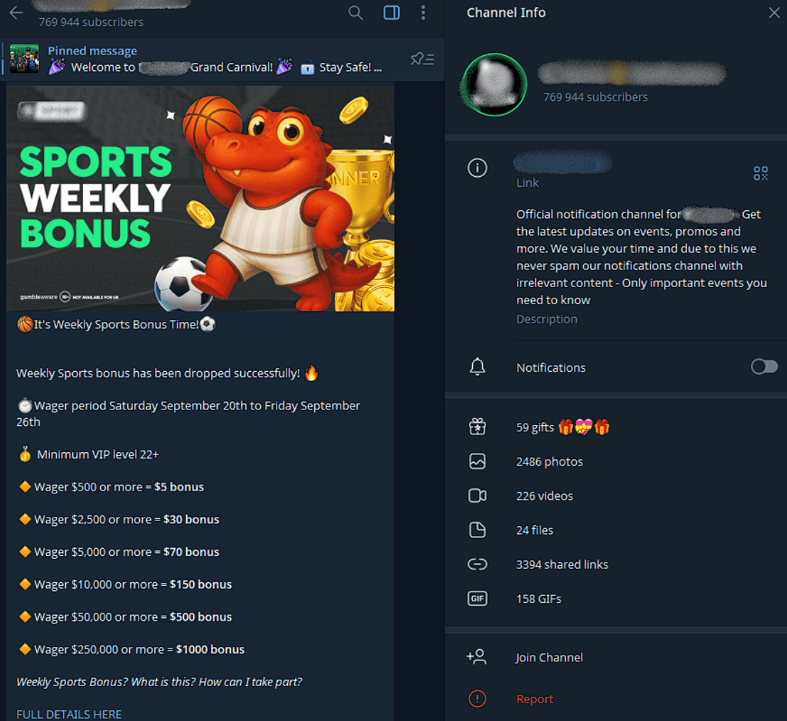
Private channels are used to share sensitive information and create a feeling of exclusiveness. Apart from that, they also reduce public visibility and may have a longer lifespan, although they do not remove platform or legal risk. For example, some casinos offer their players a bonus for sharing their reviews and payouts.
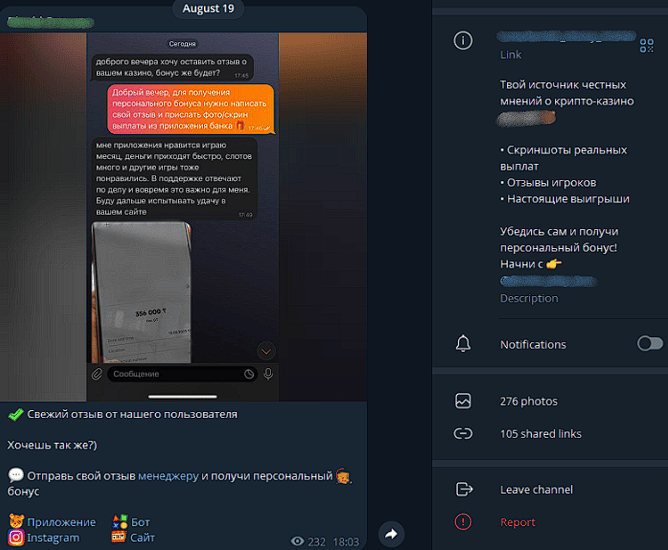
It prompts other players to share their review to get a personal bonus.
Although there are many players who leave real reviews, many affiliate marketers resort to black hat techniques and create fake screenshots. These are often used in paid ads across Telegram channels, supported with stories of “big wins to get out of poverty.” Fake payout screenshots may create short-term social proof but carry reputational, platform, and potentially legal risks.
Additionally, they also buy views and reactions from social media marketing agencies to create a trustworthy look for their channels.
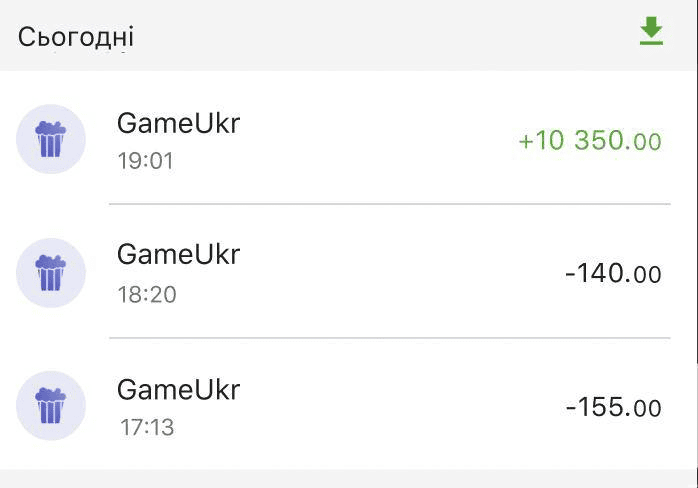
from a casino, used in ads & promotions to “prove the trustworthiness of the resource.”
However, such ads are often removed once every few days and published again to avoid potential regulatory issues. This recently happened in Ukraine, where the state regulatory body fined a blogger almost 5 million UAH (roughly $120,000 USD) for illegal gambling advertising.
2. Create a Telegram Bot
Telegram bots for gambling are a new trend in the industry, with the search term “Telegram casino” getting 1840% growth over the past 5 years. Bots are used for two main reasons:
- Improve user engagement and personalize notifications for better retention;
- Simplify access to casino websites via Telegram mini apps.
Jetton is a perfect example of this approach, as it’s one of the first casinos to implement it in their marketing strategy. Players launch the bot, automatically sign into the app, and can start playing within several clicks. The browser history stays clear, and you can easily archive the chat – ideal for those hiding their gambling activities from other people.
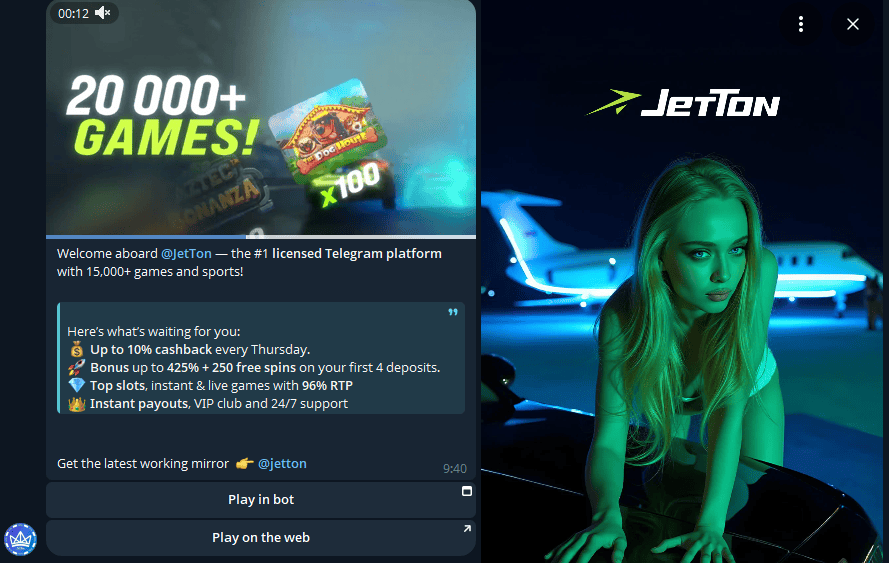
3. Generate an Audience
If you have an empty account with no followers, people will be unlikely to subscribe and go down the marketing funnel. You’ll need at least 1000+ followers to increase trust in your resources. This can be achieved by using subscriber boosting services. It will cost you around $10 per 1000 subs on Telegram.
Once you build this initial layer, you can start attracting an organic audience through:
- Targeted ads on social media;
- Influencer collaborations;
- Banner ads on websites, etc.
Use separate accounts for social media ads because gambling promotions are often banned there. Considering iGaming promos frequently include NSFW content, you’ll have to follow our guide on promoting adult creatives on Facebook and other platforms.
4. Combine These Approaches
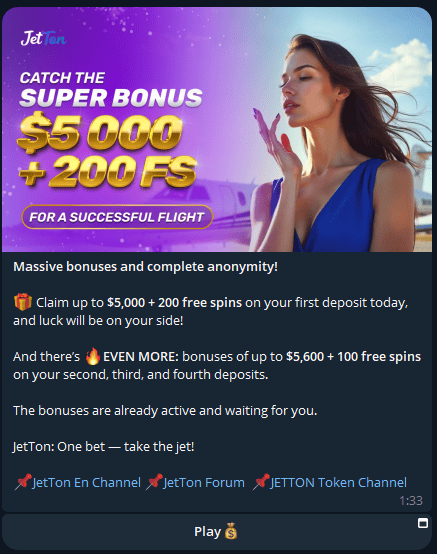
All your Telegram sources must include links to each other. This ensures players can easily navigate your resources and access what they want. Also, you can integrate links with trackers to monitor performance and test.
For example, the casino below adds links to three sources:
- Eng channel;
- Community forum;
- Crypto token channel.
“A faster method is Facebook + Telegram: sending users directly to Telegram after seeing Facebook ads. It’s simpler, but this approach may result in higher churn due to less engaged users.” — 888STARZ Partners on the AffiliateFix Forum
ASO Strategies
Google Play and the App Store allow real-money gambling apps only in selected jurisdictions and under specific licensing, geo-restriction, and distribution requirements. Affiliates also use grey- and black-hat ASO methods when direct publication is unavailable:
- Textual optimization:
- Keyword selection: use brand- or slot-specific keywords for gambling apps, but broader sports-related keywords like “match statistics” for betting apps. Tools like Google Trends are used usually for analysis.
- Metadata: optimize the app’s name, subtitle, and description with relevant keywords. Be careful to avoid direct and prohibited terms by using synonyms or indirect phrases.
- Visual optimization:
- Visuals: a trustworthy and attractive icon is a must-have to be noticed and remembered. Use high-quality screenshots and, cautiously, video previews to demonstrate the app’s features;
- Reputation management: monitor organic feedback, respond to reviews, and use relevant keywords naturally in developer responses. Grey- and black-hat teams may also purchase positive reviews to manipulate ratings, although this violates store policies and puts the app and developer account at risk;
- Project isolation: affiliates often separate apps across proxies and developer accounts to limit the impact of cross-account bans. Grey- and black-hat teams may also use shell apps that hide the gambling destination during moderation, although hidden functionality violates store policies and carries a high removal risk.
Many affiliates actively buy apps with solid ASO rankings to generate additional organic traffic. This typically involves apps with a similar audience like sports score trackers, prediction tools, slot simulators, and others. Inside these apps, affiliates place banners, push notifications, or links leading to gambling brands.
It is also common to redirect users to landing pages once the apps are launched, although this method is riskier and may lead to the app being removed from both platforms.
More on ASO strategies can be found here.
Almost Free Traffic
“Almost free” or “conditionally free” traffic refers to acquisition methods that require little or no direct media-buying spend. Affiliates still invest in content, accounts, automation, boosting, and production.
Common approaches include:
- Social media: creating or buying theme pages and doorway groups optimized for casino brand terms, sometimes supported by bots or boosted engagement;
- Telegram: running fan, media-style, or cloned channels where gambling links and promotions are inserted into existing content;
- Vertical video: publishing short clips on TikTok, Reels, or Shorts with casino branding, promo codes, and redirects through the profile, comments, or description.
SEO Casino Marketing
Google Ads supports gambling campaigns only in approved markets and under country-specific certification requirements. For offshore brands and restricted GEOs, compliant PPC is usually unavailable, so affiliates often rely on SEO or rented advertising accounts.
Although organic SEO is hard to achieve, it’s one of the biggest traffic sources in the online casino industry. Many affiliates solve this issue by building a network of review websites.
This includes two approaches:
- Drop domains: purchasing relevant expired domains that retain backlinks, mentions, or historical visibility. They may allow new content to gain traction faster than a fresh domain, but results depend on the domain’s history, topical relevance, and previous penalties. Repurposing an unrelated expired domain solely to manipulate rankings can fall under Google’s expired domain abuse policy.
- Parasite SEO: publishing optimized affiliate content on established platforms such as Reddit, Medium, media sites, or review resources to benefit from their existing authority and indexation. These pages may rank faster than content on a new domain, but the affiliate has less control over moderation and long-term availability.
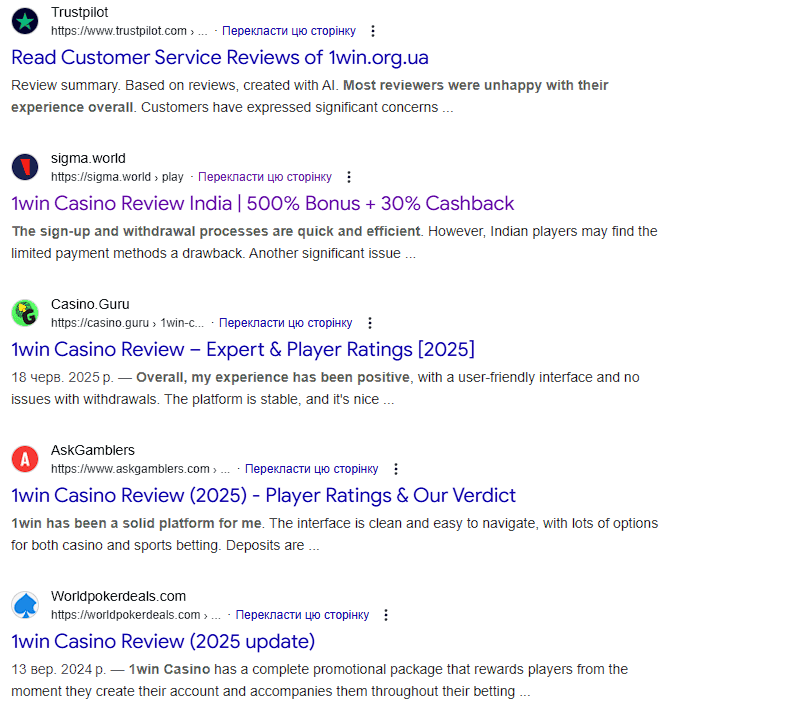
Here’s how this works:
- Create multiple single-page websites with the title “XXX Casino Review for 2026”.
- Research potential keywords through Ahrefs or Semrush to integrate into the page.
- Write a detailed review with types of games, payments, support info, and more.
- Integrate your affiliate links into brand mentions and registration prompts.
- Track rankings, clicks, registrations, FTDs, and revenue by page and traffic source.
Users often google reviews on casinos to find out whether they’re reliable, so you can use their interest to your advantage. Many established review websites also allow paid guest posting for casino overviews. This is a practical option if you would rather not host your own websites.
Paid Acquisition
Paid acquisition is the key behind most high-performing iGaming affiliate campaigns. You’ll have to invest your own money into targeted traffic from ad networks, social media platforms, and other sources to attract players. Typical paid traffic channels include:
- Popunder and redirect traffic: open a new browser window or tab beneath the main screen, displaying the landing page after the user’s interaction. It delivers massive reach at low CPMs, working best with aggressive creatives and simplified funnels. These types of traffic are commonly tested in lower-cost GEOs because they provide cheap volume and work with short funnels.
- Native advertising: integrates gambling ads into editorial articles on mainstream websites, providing a soft-sell approach. This can even be a publication on a reliable site titled “How Player X Turned $10 Into $10,000.” This approach is ideal for Tier 1 GEOs and works with long-form funnels.
- Social media marketing: involves setting targeted ads and collaborating with influencers on Instagram, Facebook, and TikTok. This is where the most engaged and emotionally reactive traffic in the iGaming vertical comes from. You need a combination of both direct and native ads here. However, you won’t be able to promote gambling ads freely in many countries. You’ll need to buy multiple Facebook ad accounts with previous spending to create ads without being banned.
If you use direct banners with “Limited offer” promotions, then it should lead users directly to the registration page. This works for people who don’t think through each step of their way. That’s the majority of your target audience in tier 2-3 markets.
However, native ads work best with “thinking” players who need to weigh up all the pros and cons. You’ll need a long-form funnel with several steps. For example:
- New headline.
- Entertainment article.
- Casino review.
- Sign-up page.
You should gain these users’ trust before converting them into players.
If you succeed, you’ll gain users with high purchasing power and longer engagement.

Social Media and Influencer Marketing
Social media dominates the discovery phase for new casino and betting brands, attracting high-converting traffic. Each platform serves different purposes:
- TikTok: fast and emotional content with wins, bonuses, and “luck challenges”;
- Instagram: visual storytelling, influencer reels, and giveaways;
- YouTube: short ads and “educational” videos with “casino winning strategies”;
- Telegram: an all-in-one platform for boosting loyalty and retention.

Affiliates typically balance between these two options:
- Setting targeted ads from third-party accounts.
- Collaborating with influencers and sharing revenue.
There’s also a third choice: almost free traffic. The most common approach here is to create or buy an active social media account with memes and any other viral content. It’s called “almost free” because it is indeed almost free compared to other traffic sources where you would pay a lot more.
This works with vertical videos on YouTube, Instagram, TikTok, and NSFW content on Reddit. You publish the content and add an affiliate link to your casino in the comments and post description. Sometimes you might have to pay for account boosting or for ad creatives development.
Regardless of your choice, you’ll have to comply with each platform’s requirements:
- Meta’s gambling ads policy for Instagram and Facebook;
- YouTube’s policies on online gambling content;
- TikTok’s advertising policies on gambling and games.
Or be prepared that your accounts will be banned every now and then, meaning a shorter lifespan and lesser ROI (because you will have to buy more accounts).
Influencers typically mention gambling ads in stories or reels that are deleted later on to prevent being banned. You can comply with all the platform’s regulations and still lose your account. This is a common occurrence among affiliates who promote iGaming offers.
It’s also worth noting that now many influencers and bloggers from Kazakhstan, Azerbaijan, Brazil, India, and Ukraine are additionally facing legal charges from local jurisdictions. That’s why you’ll have to buy multiple social media accounts to launch ads from them and stay anonymous.
Email Marketing
Email marketing is another powerful traffic channel that works best for supporting player engagement and retention. Most emails are used to share exclusive offers and bonuses, attempting to attract the user’s attention.

Gambling promotions face elevated deliverability and complaint risks, especially when sent from new domains or poorly maintained lists. This means users won’t see your promotions unless they specifically open their spam.
You’ll need a strong technical infrastructure to maximize your chances of landing a direct message in your users’ mail. This checklist can help you cope with this challenge.
| Area | Minimum setup |
|---|---|
| Authentication | SPF, DKIM and DMARC |
| Reputation | Dedicated subdomain, gradual warm-up and blacklist monitoring |
| Segmentation | Separate promotional and transactional sends |
| List hygiene | Remove inactive users, bounces and complaints |
| Monitoring | Track delivery, spam placement and complaint rates |
| Content | Unsubscribe link, required disclosures and tested HTML/plain-text versions |
Summary
iGaming affiliates work across regulated, offshore, and restricted markets, using traffic models that range from compliant advertising to grey- and black-hat acquisition. The best channel depends on the GEO, operator, budget, available infrastructure, and acceptable account and legal risk. Paid traffic provides faster campaign data, SEO builds longer-term assets, and Telegram combines acquisition, automation, and retention. Whatever the source, performance should be evaluated through qualifying FTDs, approval rates, EPC, and ROI rather than traffic volume alone.
FAQ
iGaming covers online casinos, sportsbooks, poker rooms, bingo/lotteries, and crypto casinos. In affiliate marketing, you send users to these brands and get paid for defined actions—most commonly first deposits or a revenue share.
CPA fits when you want predictable cashflow, you’re buying traffic aggressively, or you’re testing multiple GEOs and offers quickly. RevShare fits when you can deliver players who stick around and deposit repeatedly—usually through content, community, or retention-focused funnels. Hybrid is the middle ground if you want partial payback fast but still want upside from lifetime value.
GEO tiers are an informal shorthand based on purchasing power, traffic costs, competition, and expected player value. Tier 1 generally has higher costs and stricter trust or compliance requirements. Tier 2 often depends heavily on mobile traffic, localization, and local payments. Tier 3 usually offers cheaper traffic but lower average deposits and stronger bonus sensitivity. Individual countries may be classified differently by different advertisers.
It can. Demand may shift toward offshore brands, but conversion depends on operator access, payment availability, platform restrictions, account stability, and the level of local enforcement.
Telegram keeps users inside one ecosystem: content, community, bot automation, and repeated promo touches. It also makes segmentation easy (separate channels per source/angle) and works well for time-sensitive promos.
Popunder/redirect buys cheap volume and usually pairs with direct, simple funnels (often Tier 2–3). Native tends to work better with pre-landers and warmer messaging (often Tier 1). Social can scale fast, but it usually requires stronger account infrastructure and stricter compliance discipline.
FTD means first-time deposit—the first qualifying deposit made by a newly referred player. A program may apply minimum-deposit, GEO, payment-method, fraud, activity, or traffic-source requirements before approving the conversion.

Ksenia has extensive hands-on experience in affiliate marketing, having worked as a media buyer and affiliate for several years across multiple verticals. Throughout her career, she managed traffic from a wide range of sources, tested funnels, and collaborated directly with advertisers and networks.
For the past six years, she has also been writing in-depth articles, reviews, and analytical guides about affiliate marketing. Her work has appeared on well-known industry blogs and platforms, where she covers topics such as traffic sources, compliance, creatives, tracking, and campaign optimization.
Today, Ksenia combines practical experience with editorial expertise, contributing as a guest expert to various affiliate marketing projects and helping educate both beginners and experienced affiliates.

Ratmir started his copywriting career back in 2016. He is now editor-in-chief with an MA with Honors in Linguistics.
His primary expertise is in affiliate marketing, EdTech, education, IT, and sports.
Ratmir specializes in content marketing, content management, proofreading, and translation.