

Choosing an affiliate program or network is one of the most important steps for an affiliate. A correctly chosen one has good rates, working offers, support from managers, convenient work, and even prizes and contests (on behalf of a program/network). This is our list of best affiliate programs and networks of different verticals:
Gambling
-
1

Direct advertiser
Offers: 20+
GEOs: CIS, Asia, LatAm, Bangladesh, etc
CPA, RevShare, Hybrid -
2

Offers: 15+
GEOs: 10+
CPA only -
3

Direct advertiser
GEOs: 200+
CPA, RevShare (up to 40%), Hybrid
Betting
-
1

Direct advertiser
GEOs:, Bangladesh, Canada, and Germany
CPA, RevShare, Hybrid -
2

Offers: 250+
GEOs: any
CPA, RevShare, Hybrid
Min. payout is $250
Casino
-
1

Direct advertiser
GEOs: India only
CPA, RevShare (50%), Hybrid (25% + $30, and some others) -
2

GEOs: India, Bangladesh, Brazil
CPA, RevShare, Hybrid
Holds Curacao license -
3

Strict requirements for traffic sources
RevShare (50%), CPA (up to $450), Hybrid
Min. withdrawal amount is $10
Binary Options
-
1

Direct advertiser
GEOs: any
CPA, RevShare (up to 80%) -
2

Direct advertiser
GEOs: any
CPA (up to $250), RevShare (up to 80%) -
3

Direct advertiser
Japan only
CPA (up to $300), RevShare (up to 45%), Hybrid
Nutra
-
1

Offers: 18,000+
GEOs: 180 -
2

Offers: 5,500+
GEOs: any
CPA, CPL, COD, SOI, CPS, RevShare, PPI -
3

Direct advertiser
GEOs: 10+
Offers: 50+
CPA, CPL
Dating
-
1

Offers: 1500+
GEOs: any
CPA, RevShare
In-house Smartlink -
2
Offers: 5,500+
GEOs: any
CPA, CPL, COD, SOI, CPS, RevShare, PPI -
3

Direct advertiser
Offers: 6
GEOs: 63
CPA, CPL, RevShare
Software
-
1
Offers: 18,000+
GEOs: 180 -
2

Offers: 50+
CPI, CPL, CPA, RevShare, CPT, FTD, SOI
Multiple GEOs (depends on offer; Tier-1 and Tier-2 included) -
3

Offers: 400+
GEOs: 80+
CPA, CPL, CPI, CPS, CPR, RevShare
A great option for beginners
Poker

Financial
-
1

Direct advertiser
GEOs: any
RevShare, Turnover Share -
2

Offers: 1000+
GEOs: any
CPA only
Rates start from $1000 for English-speaking GEOs
Crypto
-
1
Direct advertiser
GEOs: any
RevShare, Turnover Share -
2

Offers: 1000+
GEOs: any
CPA only -
3
Offers: 1000+
GEOs: any
CPA only
Rates start from $1000 for English-speaking GEOs
Sweepstakes
-
1
Offers: 400+
GEOs: 80+
CPA, CPL, CPI, CPS, CPR, RevShare
A great option for beginners -
2

Offers: 4000+
GEOs: 100+
CPA only
In-house SmartLink
For experienced affiliates only -
3

Offers: 700+
GEOs: any
CPA, FTD, RevShare, Hybrid, CPL, CPI, CPS, free trial
E-Commerce
-
1

Direct advertiser
Offers: 500+
CPA
GEOs: Tier-2 -
2

GEOs: any
CPA, CPI, CPS, CPL, Hybrid, RevShare -
3
Offers: 700+
GEOs: any
CPA, FTD, RevShare, Hybrid, CPL, CPI, CPS, free trial
Education
-
1
Offers: 700+
GEOs: any
CPA, FTD, RevShare, Hybrid, CPL, CPI, CPS, free trial -
2
GEOs: any
CPA, CPI, CPS, CPL, Hybrid, RevShare
What Are Affiliate Programs
Affiliate programs are a performance-based marketing model where businesses reward third parties for driving specific actions, such as leads, sign-ups, or sales. Instead of buying traffic directly, advertisers collaborate with affiliates who promote products or services through their own channels and receive compensation only when a predefined result is achieved.
There are two main participants in this model. The advertiser is a company or brand that owns the product or service and sets the terms of the partnership via their affiliate program. The affiliate is an independent publisher, marketer, or media buyer who promotes the advertiser’s offer using websites, content platforms, paid traffic, or other distribution channels. Tracking technology connects both sides and ensures that results are properly attributed, which contributes to affiliate marketing being legit.

Affiliate programs are built around measurable performance. Advertisers minimize risk by paying for outcomes instead of impressions, and affiliates gain flexibility by choosing offers that match their traffic sources and expertise.
What Are Affiliate Networks
Affiliate networks are intermediaries between advertisers and affiliates. They provide a centralized platform where both sides can work together. While an affiliate program usually represents a direct partnership with a single advertiser (“in-house offers”), an affiliate network aggregates offers from multiple advertisers within one network. This allows affiliates to access a wide range of verticals and offers without negotiating individual agreements with each advertiser.
The primary role of an affiliate network is operational. Networks handle tracking, reporting, and often payments, reducing technical and administrative overhead for both advertisers and affiliates. They also standardize workflows, making it easier to launch campaigns, monitor performance, and manage multiple offers from one dashboard.
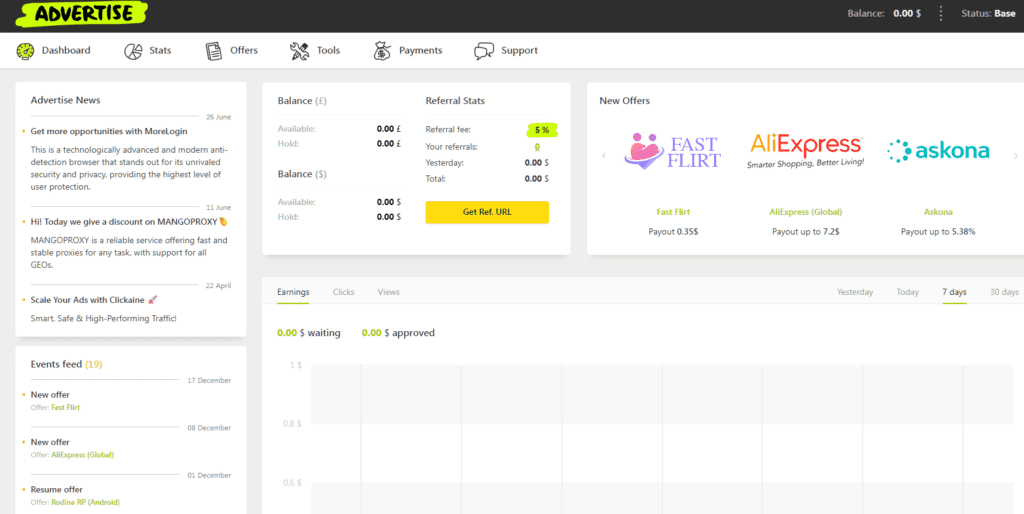
Working through a network is beneficial when affiliates want to test different niches, scale campaigns quickly, or diversify risk across multiple advertisers. For advertisers, networks provide access to an existing pool of affiliates and ready-made infrastructure.
The main advantages of affiliate networks include convenience, scalability, and consolidated reporting. Disadvantages may include less direct control over partnerships and additional intermediary layers compared to in-house affiliate programs. Also, rates are usually lower here, since affiliate networks pinch off their own commission from each payout by direct advertisers.
Popular Affiliate Payment Models
Affiliate payment models define how affiliates are compensated for the traffic and actions they deliver. Some offers imply work under single payment model, but sometimes you can choose between them. Some models are designed for fast testing and predictable payouts; others focus on building recurring revenue over time.
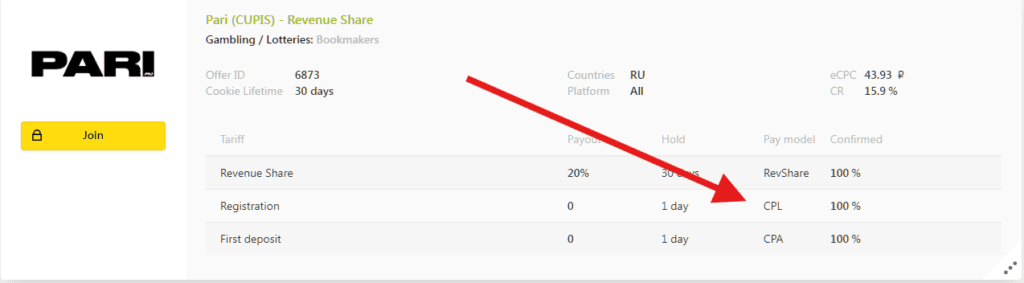
There are verticals that operate under specific and even rare models, but most affiliate programs and networks rely on a small set of core payment types. They determine what qualifies as a conversion, when commissions are earned, and how performance is evaluated. Below are the most widely used affiliate payment models across major niches.
| Payment Model | How It Works | Best For |
|---|---|---|
| CPA | Payment for a completed action such as a registration, deposit, or purchase. | Paid traffic, quick testing |
| RevShare | Percentage of revenue generated by referred users over time. | SEO, long-term projects |
| Hybrid | Combination of CPA and ongoing revenue share. | Balanced short- and long-term monetization |
| CPL | Payment for qualified leads or sign-ups. | Lead generation funnels |
| SOI | Payment for low-friction conversions, usually email submits or basic registrations without confirmation. | Incent, sweepstakes, email-based offers |
| CPI | Payment for mobile app installs. | Mobile and app traffic |
| CPS | Commission for completed sales. | E-commerce offers |
CPA
CPA (Cost Per Action) is a performance model where affiliates are paid for a specific user action defined by the advertiser. This action may include registrations, deposits, purchases, or other completed steps within a funnel. CPA is well suited for affiliates who work with paid traffic, test offers quickly, or prefer predictable payouts. Since commissions are tied to completed actions rather than long-term user activity, CPA models reduce uncertainty and make campaign optimization more straightforward.
RevShare
RevShare is a revenue-based model where affiliates earn a percentage of the revenue generated by referred users over time. Instead of being paid for a single action, affiliates participate in the ongoing value of the traffic they deliver. This model is commonly used in niches with repeat user activity and long customer lifecycles. RevShare is typically chosen by affiliates who focus on long-term projects, organic traffic, or stable audience-based monetization strategies.
Hybrid and Other Models
The Hybrid model combines elements of CPA and RevShare, balancing short-term earnings with long-term potential. But rates for both CPA and RevShare within the Hybrid model are lower compared to them being one by one.
Also, there are less popular models such as:
- CPL (Cost Per Lead): Payment for qualified leads, such as form submissions or sign-ups.
- CPI (Cost Per Install): Payment for attributed mobile or app installs.
- CPS (Cost Per Sale): Commission earned after a completed and approved sale.
- SOI (Single Opt-In): Conversion with minimal user commitment, typically an email submit or basic registration without confirmation.
Affiliate Programs and Networks by Niche
Affiliate programs and networks operate across a wide range of niches (verticals), each with its own audience behavior, monetization logic, and competitiveness. The underlying affiliate model remains the same, but the way offers are structured, promoted, and scaled can differ significantly depending on the vertical.
The most popular verticals are gambling, betting, nutra, dating, and e-commerce because payouts are quite high there. But you can’t really say that they are the best verticals, since one can make thousands and thousands in a very unpopular niche just because they understand it well and have a really good source of traffic. You can read more about best affiliate marketing niches here.
This page serves as an entry point to the main affiliate niches, helping you understand how the market is segmented and where to find more specialized listings. Each niche below links to a dedicated page with a full overview of relevant affiliate programs and networks, allowing you to explore offers in more detail.
| Niche | Description | Common Payout Models |
|---|---|---|
| Gambling | Covers real-money gaming offers across online casinos, sportsbooks, and other betting products. The niche is competitive and compliance-sensitive, with strong emphasis on traffic quality, player retention, and clear attribution. | CPA, RevShare, Hybrid |
| Casino | Focused specifically on online casino products (slots, live dealer, table games). Performance is closely tied to user engagement and repeat play, so programs often prioritize retention and long-term value. | CPA, RevShare, Hybrid |
| Poker | Promotes poker rooms and tournament platforms with a more community-driven, skill-oriented audience. Trust, product credibility, and a consistent user experience typically matter more than aggressive promo angles. | RevShare, CPA |
| Betting | SportsbIncludes sportsbook and sports-related wagering offers, often influenced by seasonal calendars and major events. Campaigns tend to revolve around timely content, event peaks, and regional sports interest. | CPA, RevShare, Hybrid |
| Dating | Covers mainstream and niche dating platforms, social discovery apps, and subscription services. The niche supports multiple monetization paths and can work with both content and performance funnels when targeting is clean. | CPL (SOI/DOI), CPS, Hybrid |
| Crypto | Includes exchanges, wallets, trading platforms, and other crypto services. Conversion depends heavily on trust and onboarding friction, so funnels often involve verification steps and education-driven intent. | CPA, CPL, RevShare |
| Binary Options | Promotes short-cycle trading products and broker offers. This niche is highly compliance-dependent and often restricted, so advertisers may enforce strict traffic rules and verification requirements. | CPA, RevShare, Hybrid |
| Nutra | Focuses on health, wellness, beauty, and supplement offers where results are driven by funnel structure, positioning, and creative angles. Often optimized around purchase intent and order approval workflows. | CPS, CPA, Hybrid |
| Financial | Covers loans, credit products, insurance, and personal finance services. Conversions usually require high-intent users and stronger trust signals, with validation or approval steps in many funnels. | CPL, CPA, CPS |
| Sweepstakes | Built around low-friction giveaway and lead-gen offers. Funnels are typically simple, but quality checks and validation rules can be strict depending on traffic source and user profile. | CPL (SOI/DOI) |
| Education | Promotes online courses, training platforms, and learning subscriptions. Demand is often evergreen, while conversion cycles can be longer because users compare programs and outcomes before purchasing. | CPS, CPL |
| E-commerce | Covers marketplaces and direct-to-consumer stores where conversion is tied to product demand, pricing, and seasonality. Content, comparison pages, and product intent funnels are commonly used. | CPS, CPA |
How to Choose the Right Affiliate Program or Network
Affiliates often search for the best affiliate programs and networks, but the right choice depends on your traffic source, niche, and the conversion you can reliably drive. Start by defining your setup in concrete terms: where the traffic comes from (SEO, paid, communities, email), how warm the audience is, and what action you can consistently generate (lead, install, purchase, deposit). Then validate the operational side — allowed traffic sources, GEO coverage, compliance requirements, tracking and reporting quality, and payout routine — because these details often determine whether an offer is scalable. If you’re comparing platforms rather than individual brands, the best affiliate networks are usually the ones that make testing and day-to-day operations predictable: ad creatives support, reliable tracking, contests for partners, and stable payments.
Next, review both the offer model and the operational basics. Also check restrictions (traffic sources, GEOs, compliance), tracking/reporting quality, and payout routine. Also, make sure withdrawals fit your workflow: available payment methods (bank transfer, cards, e-wallets, crypto), minimum payout, fees, currency options, processing time, and whether KYC is required.
Finally, use curated lists as a way to shortlist options, but rely on sources that do more than compile logos. The best affiliate programs and best affiliate networks should be backed by analysis, not simple aggregation. On AffDays, listings are supported by detailed reviews, so you can move from a top list to a deeper breakdown of how the program or network works before you commit time and budget.
How We Pick and Review Programs and Networks
The checklist above explains how affiliates should evaluate an offer on their side. Our role is to make that shortlisting step faster by applying the same logic consistently across the programs and networks we feature. That’s why AffDays top lists are not built by adding every brand we can find. We include a program or network only when we can support it with an elaborated review and clear, practical details that help you verify whether it fits your traffic, niche, and workflow.
When we review affiliate programs and networks, we focus on the same things that determine whether an offer is scalable in real life: conversion requirements and payout models, restrictions on traffic sources, GEO coverage, compliance rules, and the quality of tracking and reporting. We also consider operational factors that affect daily execution — how responsive support is, whether partner tools are available (such as creatives and promo assets), and whether the platform behaves predictably once you start scaling.
FAQ
An affiliate program is run by a single advertiser (a brand) that pays affiliates for conversions on its own product or service. An affiliate network is a platform that aggregates multiple advertisers and offers, typically providing centralized tracking, reporting, and sometimes consolidated payouts.
Neither is universally “better.” CPA is usually more predictable and easier to optimize for short-term testing and paid traffic. RevShare can outperform over time if you deliver users with strong lifetime value and retention. The best choice depends on your traffic quality, cash flow needs, and whether you’re building for short-term profit or long-term revenue.
It varies by program and network, but common schedules are weekly, bi-weekly, or monthly. Timing also depends on factors like hold periods, validation rules, and whether payments are triggered automatically or require a manual request.
Common withdrawal methods include bank transfers, cards, e-wallets, PayPal (where available), and crypto. Some programs also support local payment systems depending on your region and the advertiser’s setup.
Check the payout model and conversion definition, allowed traffic sources, GEO coverage, compliance rules, tracking and reporting quality, and the payout routine. Also verify withdrawal details: supported payment methods, minimum payout, fees, processing time, currency options, and whether KYC is required.
Yes. Networks can be a practical entry point because they provide access to multiple offers in one place, plus standardized tracking and reporting. Beginners should still start with one niche, keep testing budgets controlled, and choose networks with clear rules, responsive support, and reliable payments.

Ratmir started his copywriting career back in 2016. He is now editor-in-chief with an MA with Honors in Linguistics.
His primary expertise is in affiliate marketing, EdTech, education, IT, and sports.
Ratmir specializes in content marketing, content management, proofreading, and translation.